


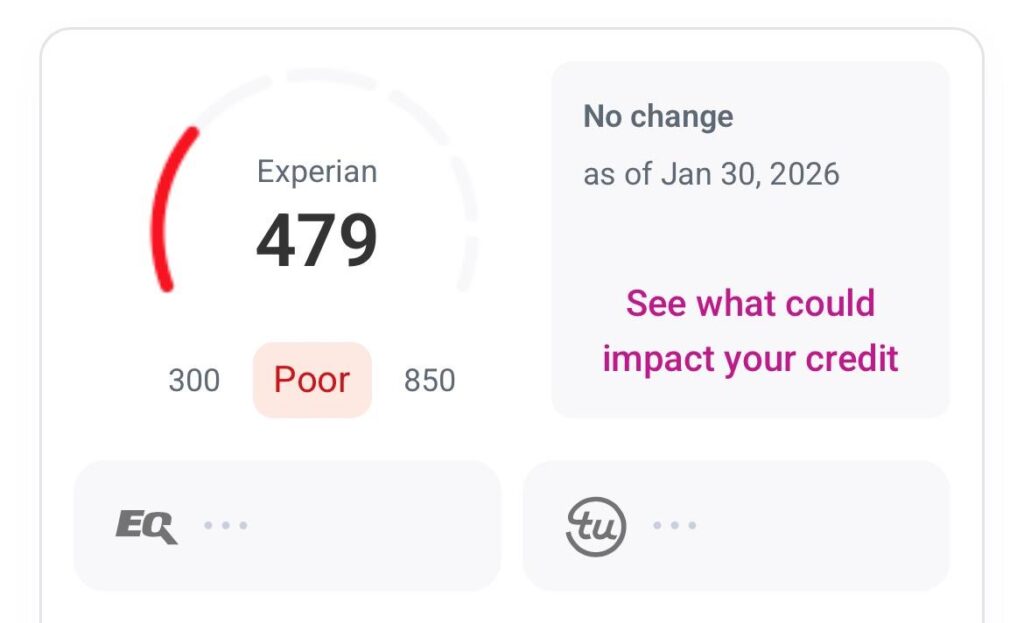
You checked your credit score and it’s lower than last month. Nothing dramatic happened — or so you thought. No missed payments, no new debt. And yet the number went down.
This is one of the most common and frustrating credit experiences in the United States. Scores move for reasons that aren’t always obvious — and some of the most common causes are things cardholders do accidentally, without realizing the scoring impact.
This guide covers the 9 most common reasons a credit score drops suddenly, how much damage each one typically causes, and the specific fix for each situation.
Editorial note: CreditPilotUSA.com provides credit education based on FICO scoring methodology. This article is for educational purposes only.
Last updated: March 2026
Quick Answer
The most common reasons a credit score drops suddenly are: a new hard inquiry from a credit application (−5 to −10 points), a higher-than-usual credit card balance reported at statement close (utilization spike), a missed or late payment, a new account lowering your average account age, a closed account reducing your available credit, an error on your report, or a collection account being added. Most drops are recoverable within 1–3 billing cycles once the cause is identified and addressed.
Reason 1: Your Credit Utilization Spiked
How much it drops your score: 20–80 points, depending on the severity
Why it happens: You made a large purchase, had an unusually high-spend month, or your credit limit was reduced — and your statement closed with a higher balance-to-limit ratio than usual.
Credit utilization accounts for 30% of your FICO score and is recalculated every month based on the balance reported on your statement closing date. A single month where your card closes at 70% utilization instead of your usual 15% can drop your score significantly — even if you pay the balance in full two weeks later.
The fix: Identify which card reported the high balance. Pay it down to under 10% of the limit before the next statement closes. The score should recover within one billing cycle. For the complete mechanics of how utilization is calculated and how to manage it, see our what is credit utilization guide.
Reason 2: A New Hard Inquiry Was Added
How much it drops your score: 5–10 points per inquiry
Why it happens: You applied for a credit card, auto loan, personal loan, or mortgage — or you authorized a landlord, employer, or utility company to pull your credit. Each formal application triggers a hard inquiry.
Hard inquiries stay on your report for 2 years but only affect your FICO score for 12 months. The impact is typically small — 5 to 10 points per inquiry — but multiple inquiries in a short period compound the effect and signal financial stress to scoring models.
The fix: If you’re rate-shopping for a mortgage or auto loan, submit all applications within a 30-day window — FICO groups these as a single inquiry. For credit cards, space applications at least 6 months apart. The score impact fades automatically over 12 months with no action required.
Reason 3: You Missed or Were Late on a Payment
How much it drops your score: 60–110 points (depending on your starting score and how late)
Why it happens: A payment was 30+ days late and the creditor reported it to the bureaus. Even a single 30-day late payment can cause dramatic score drops — the higher your starting score, the more damage a late payment causes.
The FICO scale penalizes recent derogatory events heavily. A 30-day late payment from last month causes more score damage than a 90-day late payment from 4 years ago.
The fix: Bring the account current immediately. Set autopay for the minimum payment on every account going forward — this prevents future late payments regardless of what else is happening. For a single isolated late payment with otherwise clean history, contact the creditor and request a goodwill deletion in writing. For the full breakdown of how late payments affect scores over time, see our how late payments affect your credit score guide.
Reason 4: You Opened a New Credit Account
How much it drops your score: 5–15 points
Why it happens: Opening a new credit card or loan does two things simultaneously: it adds a hard inquiry (−5 to −10 points) and it lowers your average age of accounts — because the new account has zero history and pulls the average down.
This is a temporary effect. Over 12–24 months, the new account ages, starts contributing positive payment history, and the average account age recovers. The long-term effect of a new account is almost always positive — but the short-term drop surprises many cardholders.
The fix: Nothing — this is expected and temporary. Don’t apply for new credit in the 3–6 months before a major loan application (mortgage, auto) if the point drop could push you below a lender’s approval threshold.
Reason 5: You Closed an Old Credit Card
How much it drops your score: 10–30 points (more if it was your oldest account or had a high limit)
Why it happens: Closing a credit card removes its credit limit from your total available credit — which mechanically increases your utilization ratio across all remaining cards. It can also reduce your average account age if the closed card was one of your older accounts.
Example: You have two cards — a $5,000 limit and a $2,000 limit. Total available: $7,000. You close the $5,000 card. Now your available credit drops to $2,000 — and if you carry $600 in balances, your utilization jumps from 8.6% to 30% overnight. No new spending, just a closed account.
The fix: Keep old cards open. If the card has an annual fee you don’t want to pay, call the issuer and ask to downgrade to a no-fee version — this preserves the credit limit and account history without the cost. If you’ve already closed it, the history on a closed account in good standing remains visible for 10 years, which softens the long-term impact.
Reason 6: A Collection Account Was Added
How much it drops your score: 50–110 points
Why it happens: A debt you owed went unpaid long enough that the original creditor sold it to a collection agency — which then reported the collection to the bureaus. Medical bills, utility accounts, gym memberships, and parking tickets are common sources of collections that surprise cardholders.
The fix depends on the type:
- Medical collections under $500: Removed from all three bureaus as of 2023 — if still appearing, dispute immediately
- Paid collections: Consider requesting pay-for-delete in writing if still unpaid; payment alone changes the status but does not remove the item
- Disputed collections: If the debt is not yours or the amount is wrong, dispute with the bureau within 30 days of first appearance for best results
Reason 7: Your Credit Limit Was Reduced
How much it drops your score: 10–40 points
Why it happens: Card issuers periodically review accounts and reduce credit limits on cards that are inactive, on accounts showing financial stress signals, or in response to broader economic conditions. A limit reduction raises your utilization ratio on that card — and possibly your overall ratio — without any change in your balance.
Example: Your card limit drops from $3,000 to $1,500 while you carry a $400 balance. Your utilization on that card jumps from 13% to 27% overnight.
The fix: Pay the balance on the affected card down to under 10% of the new limit immediately. Then call the issuer and request reinstatement of the original limit — many will restore it for customers with strong payment history. If not, focus on rebuilding the score through utilization management on other cards.
Reason 8: An Error Appeared on Your Report
How much it drops your score: Variable — 20 to 100+ points depending on the error
Why it happens: Credit reporting errors are more common than most Americans realize. Mixed files (another person’s account appearing on your report), incorrect delinquency dates, duplicate collection entries, and accounts reported as open after being closed are all documented error types.
The fix: Pull your full report from all three bureaus at AnnualCreditReport.com and compare them carefully. File a dispute with the bureau reporting the error — online, by mail, or by phone. Bureaus must investigate within 30 days and remove unverifiable items. For the full process, see our how to fix your credit score guide.
Reason 9: Your Score Model or Bureau Changed
How much it drops your score: Apparent drop only — no real change
Why it happens: Different credit score apps pull from different bureaus and use different scoring models. Credit Karma uses VantageScore from TransUnion. Experian app uses FICO Score 8 from Experian. Your bank’s score tool might use FICO Score 9 from Equifax. When you switch between apps or when an app switches its data source, you might see a 15–30 point “drop” that reflects model differences — not an actual change in your creditworthiness.
The fix: Understand which score source you’re comparing. For consistent tracking, always compare the same score from the same bureau month to month. For the score that matters most to lenders, use FICO Score 8 from Experian — available free in the Experian app. For the full breakdown of score sources and which to trust, see our how to check your credit score for free guide.
How to Diagnose Your Specific Drop
Step 1: Pull your report from all three bureaus at AnnualCreditReport.com and compare to last month’s data.
Step 2: Look for anything that changed — new account, new inquiry, balance change, new negative item, limit reduction, or closed account.
Step 3: Match what changed to the reasons above and apply the corresponding fix.
Step 4: Monitor monthly. Use Credit Karma for weekly VantageScore updates to track recovery, and Experian app for monthly FICO Score 8 as your primary benchmark.
How Fast Will My Score Recover?
| Cause | Recovery Speed | Action Required |
|---|---|---|
| Utilization spike | 1 billing cycle | Pay down balance before next statement |
| Hard inquiry | 12 months (automatic) | None — fades automatically |
| New account / age drop | 6–12 months (automatic) | None — account ages naturally |
| Late payment | 12–24 months | On-time payments + goodwill request |
| Closed account | 3–6 months | Reduce utilization on remaining cards |
| Credit limit reduction | 1–2 billing cycles | Pay balance on affected card below 10% |
| Collection added | 12–24 months | Pay/dispute + rebuild positive history |
| Report error | 30–45 days | File dispute with bureau immediately |
Frequently Asked Questions
Why did my credit score drop when I paid off a loan?
Paying off an installment loan (auto, personal, student) can temporarily drop your score by removing an active account from your credit mix — which accounts for 10% of your FICO score. If the paid loan was your only installment account, scoring models see a thinner credit mix and may reduce the score slightly. This is temporary and typically recovers within 1–3 months as other positive factors compensate.
Why did my credit score drop for no reason?
The most common “no reason” drops are: a utilization spike from a higher-than-usual monthly balance at statement close, a hard inquiry from a forgotten application, or a credit limit reduction by an issuer. Pull your full report from all three bureaus and look for anything that changed in the past 30–60 days — there is always a specific cause.
How much does a credit score drop after a hard inquiry?
A single hard inquiry typically drops a FICO score by 5 to 10 points. The exact impact depends on your total credit profile — people with thin files or recent negative events see larger drops than those with long, established histories. The impact fades automatically over 12 months and disappears from the score calculation entirely after that, though the inquiry remains visible on the report for 2 years.
Can a credit score drop overnight?
Yes. Credit scores are recalculated every time a creditor reports new information to the bureaus — which happens monthly, typically on your statement closing date. A late payment reported on that date, a balance spike, or a new collection can drop your score by 50–100+ points within a single reporting cycle. The change appears in your score as soon as the bureau processes the new data.
Final Thoughts
A credit score drop is always caused by something specific. The score doesn’t move randomly — it responds to the information creditors report to the bureaus.
The fastest path to recovery is identifying the cause precisely, applying the corresponding fix, and ensuring no new negative events occur during the recovery period. For most drop reasons, recovery begins within one billing cycle. For the most serious causes — late payments and collections — recovery takes longer but follows a predictable timeline.
For the complete framework for fixing a damaged credit score from any starting point, see our how to fix your credit score guide.
Disclaimer: Credit score impacts described are estimates based on FICO scoring patterns and vary by individual credit profile. FICO scoring models are proprietary and subject to change. This article is for educational purposes only.

Danilo is a Credit Analyst and the Founder of CreditPilotUSA.com. With deep expertise in the credit card industry, he translates complex banking news and reward systems into actionable financial strategies. Dedicated to helping Americans master their credit scores and maximize the cards in their wallets.