

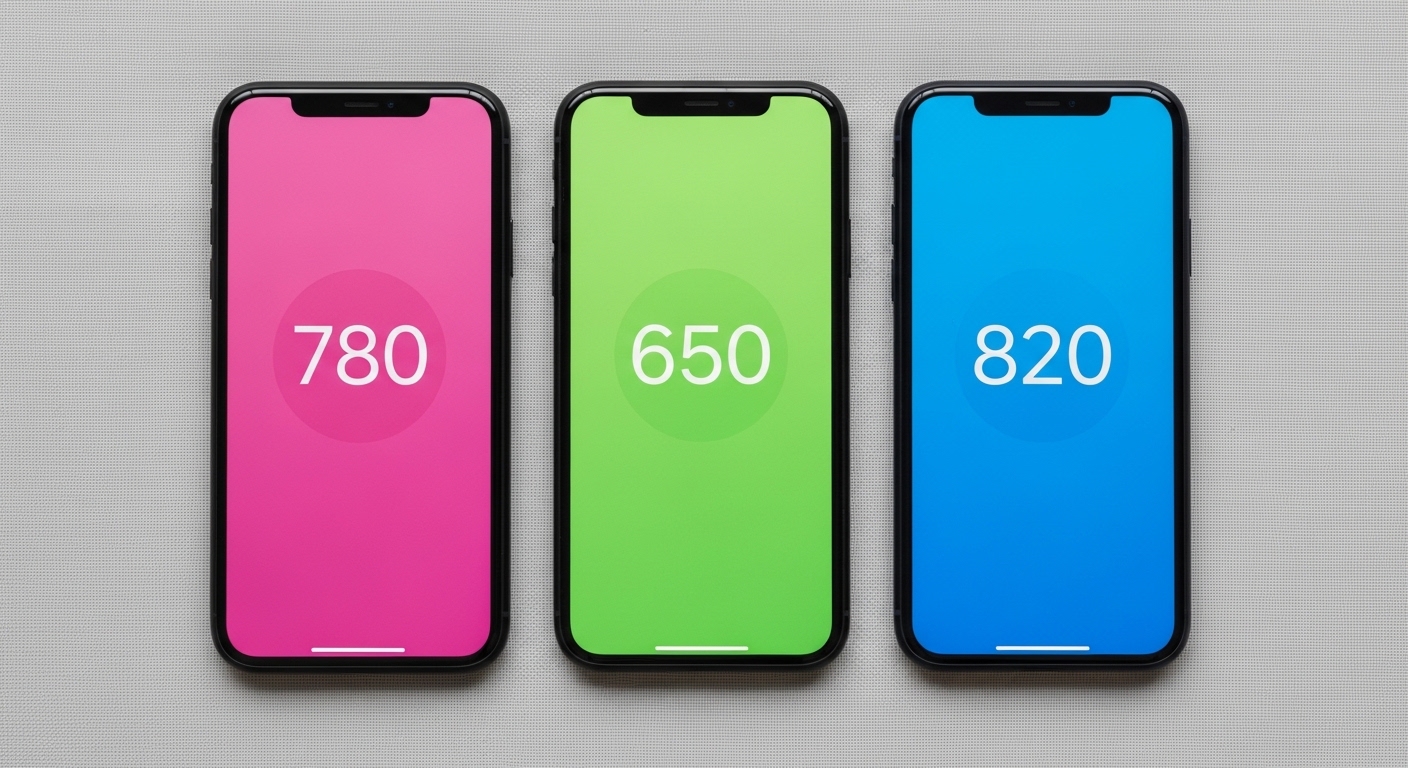
You checked Credit Karma this morning. Then you opened your bank app. Then you looked at the Experian app.
Three different numbers. Same person. Same day.
If this has ever happened to you, you’re not crazy — and your credit isn’t broken. The system is just more fragmented than anyone bothered to tell you. Understanding why your score varies across apps is one of the most useful things you can learn about how credit actually works in the United States.
There Is No Single “Your Credit Score”
This surprises most people: you don’t have one credit score. You have dozens.
Every time a lender, landlord, or app checks your credit, they can choose from multiple scoring models — each developed by different companies, using slightly different formulas, pulling from potentially different bureaus.
The two most common scoring systems in the US are FICO and VantageScore. Both use a 300–850 scale. Both pull from the same underlying credit bureau data. But they weight factors differently, treat certain items differently, and update on different schedules.
This is why the number on Credit Karma can be 30 points higher — or lower — than the number on your Experian app, even though both are looking at your credit history.
The 3 Variables That Create Different Numbers
1. Different Scoring Models
FICO Score is used in over 90% of US lending decisions. There are actually multiple versions — FICO 8, FICO 9, FICO 10 — and lenders pick the version they prefer. FICO 8 is the most common.
VantageScore (versions 3.0 and 4.0) is what most free monitoring apps use, including Credit Karma. It’s a real, legitimate score — but it’s not what your bank pulls when you apply for a mortgage or credit card.
The practical difference: VantageScore 4.0 ignores paid collections entirely. FICO 8 still penalizes them. If you have a paid collection on your report, your VantageScore could be meaningfully higher than your FICO.
2. Different Bureaus
Equifax, Experian, and TransUnion are three separate companies that collect credit data independently. Not every creditor reports to all three. A credit card you opened three years ago might appear on your Equifax report but not on TransUnion — or vice versa.
So when Credit Karma shows your TransUnion score and your bank shows your Experian score, they’re calculating from slightly different datasets. Different inputs, different outputs.
3. Different Update Schedules
Credit Karma updates weekly. The Experian app updates monthly, typically a few days after your statement closes. Your bank’s built-in score tool might update even less frequently.
If you check Credit Karma on Monday and your bank app on Friday, you’re comparing scores from two different points in time — and your utilization, balance, or inquiry count might have changed between them.
Which Score Actually Matters?

For everyday monitoring and tracking progress: Credit Karma is useful. The weekly updates help you see directional changes quickly — did your score go up after you paid down a balance? Did it drop after an inquiry?
For knowing what a lender will actually see: FICO Score 8 from Experian, available free through the Experian app. This is the closest to what most US lenders pull when you apply for a credit card, personal loan, or auto loan.
For mortgage preparation specifically: lenders pull all three bureau FICO scores and use the middle score. You’d need scores from all three bureaus — which is where a paid service like myFICO becomes relevant, though it’s only necessary in the months before a major mortgage application.
According to the Consumer Financial Protection Bureau (CFPB), consumers have the right to know which score and which bureau a lender used to make a credit decision. If you’re denied credit, the adverse action notice must disclose this information.
The Number That Actually Matters Most Right Now
Stop comparing scores across different apps. It’s noise.
Instead, pick one source and track that number over time:
- For weekly tracking: Credit Karma (TransUnion VantageScore)
- For lender-relevant benchmark: Experian app (FICO Score 8)
- For full report review: AnnualCreditReport.com — free, all three bureaus, no score included but full account history
The score you care about isn’t the highest one you can find. It’s the one that accurately reflects your credit health — and moves in the right direction month over month.
For the best free tools to monitor your score across all three bureaus without paying anything, see our full guide on the best apps to improve your credit score.
One More Thing Worth Knowing
The score differences between apps are usually small — 10 to 30 points in either direction. If one app is showing you 710 and another is showing 680, you’re not in two different credit tiers. You’re in the same general range, viewed through two different lenses.
What matters more than the exact number is the trend. Is it going up? Down? Staying flat?
Track the trend. Understand the system. And stop worrying about which app shows the “real” number — because they all do, just from different angles.
For more guides on understanding and improving your credit score in the United States, visit CreditPilotUSA.com — your trusted co-pilot for navigating the world of credit.
Disclaimer: Credit scoring models and bureau reporting practices are subject to change. This article is for educational purposes only.

Danilo is a Credit Analyst and the Founder of CreditPilotUSA.com. With deep expertise in the credit card industry, he translates complex banking news and reward systems into actionable financial strategies. Dedicated to helping Americans master their credit scores and maximize the cards in their wallets.