

Millions of people living and working in the United States face the same frustrating wall: they need a credit history to access financial products, but every financial product seems to require a Social Security Number they don’t have yet.
It’s a real problem — and it has real solutions.
Whether you’re a recent immigrant, a visa holder, an international student, or a permanent resident still waiting for your SSN, there are concrete, legal pathways to building a US credit history without one. Banks, credit card issuers, and credit bureaus have all created programs specifically for this situation — and most people who qualify have never heard of them.
This guide covers every option available in 2026, from ITIN-based credit cards to immigrant-friendly banks to credit history transfer programs, so you can start building your US credit profile from day one.
Editorial note: CreditPilotUSA.com provides financial education for US consumers and immigrants. This article covers legitimate credit-building options and does not constitute legal or immigration advice.
Last updated: March 2026
Quick Answer
You can build credit in the USA without a Social Security Number using an Individual Taxpayer Identification Number (ITIN), a passport, or through specialized immigrant banking programs. The fastest path is applying for an ITIN-accepting credit card — such as the Deserve EDU Mastercard or select secured cards — combined with a credit-builder loan or becoming an authorized user on a trusted person’s account. Most immigrants see their first US credit score within 3–6 months of opening their first account.
What Is an ITIN and Why It Matters for Credit
An Individual Taxpayer Identification Number (ITIN) is a tax processing number issued by the IRS to individuals who need to file US taxes but are not eligible for a Social Security Number. It is a 9-digit number that begins with the number 9.
ITINs are issued regardless of immigration status. You do not need to be a lawful permanent resident, have a work visa, or have any specific visa status to obtain one. The IRS issues ITINs to anyone who has a US tax filing requirement.
Who typically has or qualifies for an ITIN:
- Nonresident aliens with US income
- Dependent or spouse of a US citizen or resident alien
- Foreign students, professors, or researchers on specific visas
- Undocumented individuals with US tax obligations
- Anyone who needs to file a US tax return but cannot get an SSN
How to get an ITIN: File IRS Form W-7 with your federal tax return, along with proof of identity (passport) and foreign status. Processing typically takes 7–11 weeks. For full details, visit the IRS ITIN page.
Once you have an ITIN, many financial institutions will accept it in place of an SSN for account opening and credit applications.
Step-by-Step: How to Build Credit in the USA Without an SSN

Step 1: Get an ITIN (or Identify Your Accepted Identification)
Your first step is determining what identification you have available:
- ITIN — accepted by most immigrant-friendly banks and several credit card issuers
- Passport — accepted by some fintech banks and secured card programs even without an ITIN
- Visa + foreign bank statements — accepted by some international programs (see Step 5)
If you don’t have an ITIN and are eligible to apply, do so before anything else. It unlocks the broadest range of financial products.
Step 2: Open a Bank Account
A US bank account is the foundation of your financial profile. Several major banks and credit unions accept ITINs for account opening:
- Bank of America — accepts ITIN for checking and savings accounts
- Wells Fargo — accepts ITIN for account opening
- Chase — accepts ITIN at many branches (policies vary by location)
- Citibank — accepts ITIN and has international transfer programs
- Credit unions — many local and regional credit unions accept ITIN and are more flexible than large banks
Alternative: Fintech banks like Chime and Current accept new members with only a passport and a US address — no ITIN, no SSN, no credit history required.
Having a bank account establishes your US financial address and is typically required by credit card issuers for statement delivery and payment processing.
Step 3: Apply for an ITIN-Accepting Credit Card
This is the fastest way to start generating a US credit history. Several card issuers specifically accommodate applicants without SSNs.
Top credit cards that accept ITIN or no SSN:
Deserve EDU Mastercard The Deserve EDU is one of the most widely recommended cards for international students and immigrants. It requires no SSN, no US credit history, and no cosigner. Deserve uses its own underwriting model that considers education, income potential, and financial behavior rather than FICO scores.
- 1% cashback on all purchases
- No annual fee
- No foreign transaction fee
- No SSN required — passport accepted
- Available to F-1 visa students and other non-citizen residents
OpenSky® Secured Visa® OpenSky does not require a credit check or SSN for application — only a valid government-issued ID and a refundable security deposit ($200 minimum). It reports to all three major credit bureaus monthly, making it one of the fastest credit-building tools available to immigrants.
- No SSN required, no credit check
- $200–$3,000 security deposit (becomes your credit limit)
- $35 annual fee
- Reports to Equifax, Experian, and TransUnion
ITIN-accepting bank-issued secured cards Many credit unions and community banks issue secured Visa or Mastercard products to ITIN holders. Contact local credit unions in your area — they often have the most flexible documentation requirements and the most experience with immigrant applicants.
Step 4: Become an Authorized User on a Trusted Account
If you have a US citizen spouse, parent, relative, or close friend with good credit, ask to be added as an authorized user on their credit card account.
Here’s why this works: when you’re added as an authorized user, the entire payment history of that account — sometimes years of on-time payments — can be added to your credit report. Depending on how the primary cardholder’s issuer reports, you may receive a credit history boost within one billing cycle.
You do not need to use the card, carry it, or even have it mailed to you in some cases. The credit-building benefit happens through the reporting, not the spending.
What to look for in an authorized user account:
- Long account history (the older, the better)
- Low utilization (under 30% ideally)
- Perfect payment history — one missed payment on the primary account will appear on your report too
Step 5: Consider Nova Credit for International Credit History Transfer
If you have an established credit history in another country, Nova Credit allows you to import that history into the US financial system. Nova Credit translates foreign credit reports from over 20 countries — including Mexico, India, Canada, Australia, the UK, Brazil, and South Korea — into a format that US lenders can evaluate.
Several major financial institutions currently accept Nova Credit reports, including:
- American Express — accepts Nova Credit for card applications
- SoFi — accepts Nova Credit for personal loans
- Verizon — accepts Nova Credit for wireless plans
- Select landlords and rental platforms
Visit Nova Credit to check if your home country is supported and initiate a credit passport transfer. This is one of the most underused tools available to recent immigrants — particularly those from countries with well-developed credit bureau systems.
Step 6: Add a Credit-Builder Loan
A credit-builder loan is a product specifically designed to build credit for people with no history. Unlike traditional loans where you receive money upfront, a credit-builder loan works in reverse: you make monthly payments into a savings account, and at the end of the loan term, you receive the accumulated funds. Every payment is reported to the credit bureaus.
Self Financial offers credit-builder accounts starting at $25/month with no hard credit inquiry required — available to ITIN holders and people with no existing credit history. The Consumer Financial Protection Bureau (CFPB) recognizes credit-builder loans as one of the most effective tools for establishing credit history for thin-file and no-file consumers.
After 12 months of on-time payments, most credit-builder loan users see a FICO score established and significant history on their credit report.
Step 7: Monitor Your Credit Profile as It Builds
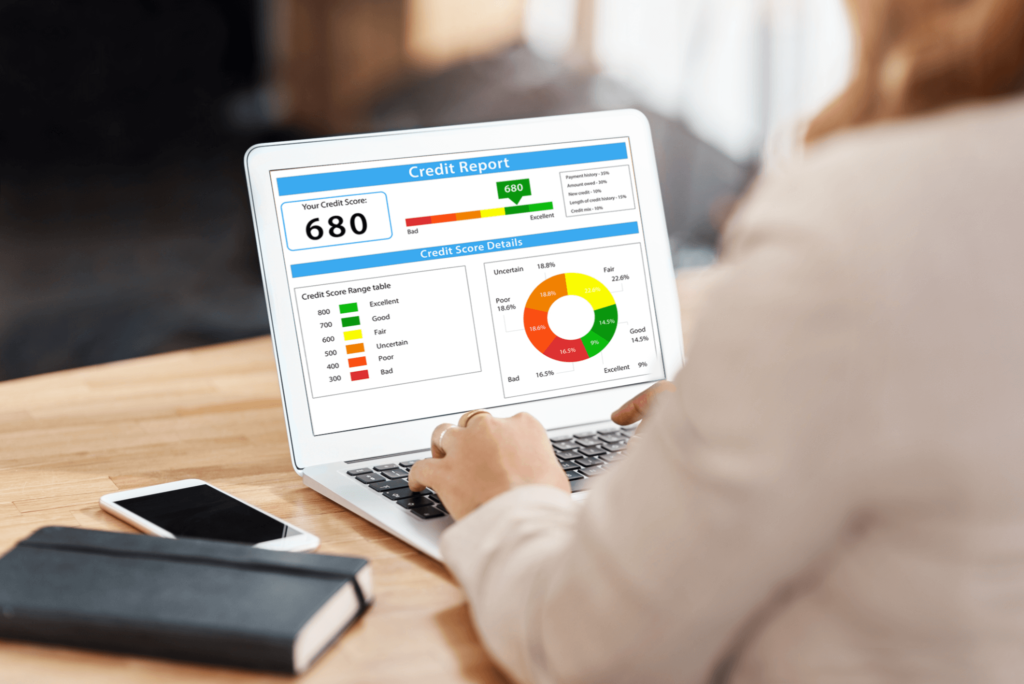
Once accounts start reporting, track your progress monthly. Two free tools work well for immigrants building US credit:
- Credit Karma — shows VantageScore from TransUnion and Equifax; updates weekly; accessible without SSN using ITIN
- Experian’s free app — shows FICO Score 8 from Experian; requires account creation but accessible to ITIN holders
Tracking your score monthly lets you catch reporting errors early — which are more common for new credit files — and understand which actions are moving your score most efficiently.
How Long Does It Take to Build Credit With No SSN?
| Action Taken | Time to First Score | Typical Starting Score |
|---|---|---|
| Authorized user on active account | 1–2 billing cycles | 650–700 (depends on primary account) |
| Secured card (reports monthly) | 3–6 months | 580–650 |
| Credit-builder loan only | 6–12 months | 600–650 |
| ITIN credit card (no prior history) | 3–6 months | 580–640 |
| Nova Credit transfer (strong foreign history) | Immediate (lender-dependent) | Varies by home country history |
The fastest combination: become an authorized user and open your own secured card or ITIN card simultaneously. You may receive a score in 30–60 days and a score above 650 within 6 months.
Common Mistakes Immigrants Make When Building US Credit
- ❌ Waiting to start — every month without an account is a month of credit history you can never get back; start immediately with any available option
- ❌ Using only cash or debit — debit card transactions and cash purchases are never reported to credit bureaus; they build zero credit history regardless of how responsibly you manage them
- ❌ Applying to cards that require SSN — most mainstream credit card issuers require SSN and will deny applications without one; check ITIN acceptance before applying to avoid unnecessary hard inquiries
- ❌ Closing your first account too soon — the age of your oldest account is a direct input into your FICO score; keep your first card open indefinitely, even after you qualify for better cards
- ❌ Missing a payment on a credit-builder product — one missed payment on a thin credit file causes disproportionate score damage; set up autopay from day one
Read more: How Long Does Negative Information Stay on Your Credit Report?
Frequently Asked Questions
Can I build credit in the USA without a Social Security Number?
Yes. You can build US credit using an Individual Taxpayer Identification Number (ITIN), a passport, or through specialized immigrant banking programs. Several credit card issuers — including Deserve and OpenSky — accept applications without an SSN. Becoming an authorized user on a trusted person’s account and using Nova Credit to import foreign credit history are also effective options available to non-SSN holders.
What credit cards accept ITIN instead of SSN?
The Deserve EDU Mastercard and OpenSky® Secured Visa® are the most widely available credit cards that accept ITIN or alternative identification. Several credit unions and community banks also issue secured cards to ITIN holders. American Express accepts Nova Credit reports for some applications, allowing immigrants with strong foreign credit histories to apply without a US credit score.
How long does it take to get a credit score with no SSN or credit history?
Most immigrants opening their first US credit account see a credit score generated within 3–6 months of consistent account activity. Becoming an authorized user on an established account can generate a score faster — sometimes within 30–60 days. Nova Credit transfers can make a score available to specific lenders immediately for those with qualifying foreign credit histories.
Does having an ITIN hurt my credit or immigration status?
No. Having an ITIN does not negatively affect your credit score or immigration status. The IRS issues ITINs to assist with US tax compliance — they have no bearing on visa eligibility, green card applications, or naturalization. Using an ITIN to apply for financial products is legal, standard practice, and does not create any immigration record.
What is Nova Credit and how does it help immigrants build credit?
Nova Credit is a financial technology company that translates credit histories from foreign bureaus into a format US lenders can evaluate. It currently supports credit histories from over 20 countries including Mexico, India, Canada, Australia, the UK, Brazil, and South Korea. American Express, SoFi, and several other major lenders accept Nova Credit reports as part of the application process — allowing immigrants with strong foreign credit histories to qualify for US financial products without first building a domestic credit file.
Final Thoughts
Building credit in the United States without a Social Security Number is more achievable than most immigrants realize — and the financial institutions that serve this population have created more options than ever before.
The path is clear: get an ITIN if you’re eligible, open a bank account, apply for one of the ITIN-accepting cards, and consider becoming an authorized user simultaneously. Check Nova Credit if you have a strong credit history in your home country. Add a credit-builder loan to accelerate the process.
Within 6–12 months of consistent, on-time activity, most immigrants have a US credit profile strong enough to qualify for mainstream financial products — cards, auto loans, leases, and eventually mortgages — that were previously unavailable.
The credit system in the United States is not designed with immigrants in mind. But it is navigable — and starting sooner is always better than waiting for a situation that may be further away than you think.
For more guides on navigating the US credit system, building your score from scratch, and choosing the right first cards, visit CreditPilotUSA.com — your trusted co-pilot for navigating the world of credit.
Disclaimer: Immigration policies, IRS procedures, and financial product availability are subject to change. This article provides general educational information only and does not constitute legal, tax, or immigration advice. Consult a qualified immigration attorney or tax professional for advice specific to your situation.

Danilo is a Credit Analyst and the Founder of CreditPilotUSA.com. With deep expertise in the credit card industry, he translates complex banking news and reward systems into actionable financial strategies. Dedicated to helping Americans master their credit scores and maximize the cards in their wallets.