


Two cards. Same family. Very different math.
The Chase Sapphire Preferred and Chase Sapphire Reserve are the most compared credit cards in America — and for good reason. Both are exceptional travel cards. Both access the same 14 transfer partners. Both offer primary rental car coverage and trip cancellation insurance. And both are held by millions of Americans who use them as the foundation of their credit card strategy.
But one costs $95 per year and one costs $550. That $455 gap is either completely justified or completely unjustifiable — depending entirely on how you spend and travel.
This guide breaks down every difference between the Chase Sapphire Preferred and Reserve, gives you the exact math on when each card pays off, and delivers a clear recommendation for every type of cardholder.
Editorial note: CreditPilotUSA.com evaluates credit cards based on real annual value and fee structure. Cards are selected independently — we are not paid to feature specific products.
Last updated: March 2026
Quick Answer
The Chase Sapphire Preferred ($95/year) is the better card for most Americans — especially those new to travel rewards, spending $500–$2,000/month, or unable to fully utilize the Reserve’s $300 travel credit. The Chase Sapphire Reserve ($550/year, ~$250 effective) is worth it for frequent travelers spending $3,000+/month across travel and dining who will use Priority Pass lounge access consistently. If you’re unsure which you qualify for, see our credit score ranges explained guide — both require approximately 700+.
Chase Sapphire Preferred vs. Reserve — Full Specs
| Detail | Sapphire Preferred | Sapphire Reserve |
|---|---|---|
| Annual Fee | $95 | $550 |
| Effective Annual Fee | ~$45 | ~$250 |
| Welcome Bonus | 60,000 pts ($750 portal) | 60,000 pts ($900 portal) |
| Dining | 3x points | 3x points |
| Travel (all) | 2x points | 3x points |
| Chase Travel Portal | 5x points | 10x points |
| Streaming | 3x points | 1x |
| Online Grocery | 3x points | 1x |
| Everything Else | 1x | 1x |
| Annual Travel Credit | $50 (hotel, Chase Travel) | $300 (any travel) |
| Airport Lounge Access | ❌ | ✅ Priority Pass (1,300+ lounges) |
| Point Value in Portal | 1.25¢ | 1.5¢ |
| Global Entry/TSA PreCheck | ❌ | ✅ $100 credit |
| Primary Rental Car Coverage | ✅ | ✅ |
| Trip Cancellation | Up to $10,000/trip | Up to $10,000/trip |
| DashPass (DoorDash) | ✅ Complimentary | ✅ Complimentary |
| Transfer Partners | 14 (1:1) | 14 (1:1) |
| Foreign Transaction Fee | $0 | $0 |
| Minimum Credit Score | ~700 | ~720 |
The Effective Fee: What You Actually Pay
The nominal fee difference is $455. But both cards come with credits that reduce the real cost significantly — and the math on each is different.
Chase Sapphire Preferred — Effective Fee: ~$45/year
The Preferred includes a $50 annual hotel credit applied automatically when you book a hotel through Chase Travel. For the vast majority of cardholders who stay in a hotel at least once per year, this credit is effectively guaranteed — reducing the real annual cost to $45.
Net fee: $95 − $50 = $45/year
Chase Sapphire Reserve — Effective Fee: ~$250/year
The Reserve includes a $300 annual travel credit that applies automatically to the first $300 in travel purchases each year — any flight, hotel, Uber, Lyft, parking garage, toll, or transit purchase. For anyone who spends $300 on travel in a calendar year (which is nearly every American household), this credit is fully utilized.
It also includes a $100 Global Entry or TSA PreCheck credit every four years — worth $25/year on an annualized basis.
Net fee: $550 − $300 travel credit − $25 TSA annualized = ~$225/year
Some cardholders further offset the fee with DashPass value and Lyft Pink credits — bringing the effective fee lower. But at a conservative estimate, the Reserve costs approximately $225 more per year than the Preferred after credits.
The question is whether the Reserve’s additional benefits generate at least $225 more in annual value than the Preferred.
Where Each Card Wins
Where the Sapphire Preferred Wins
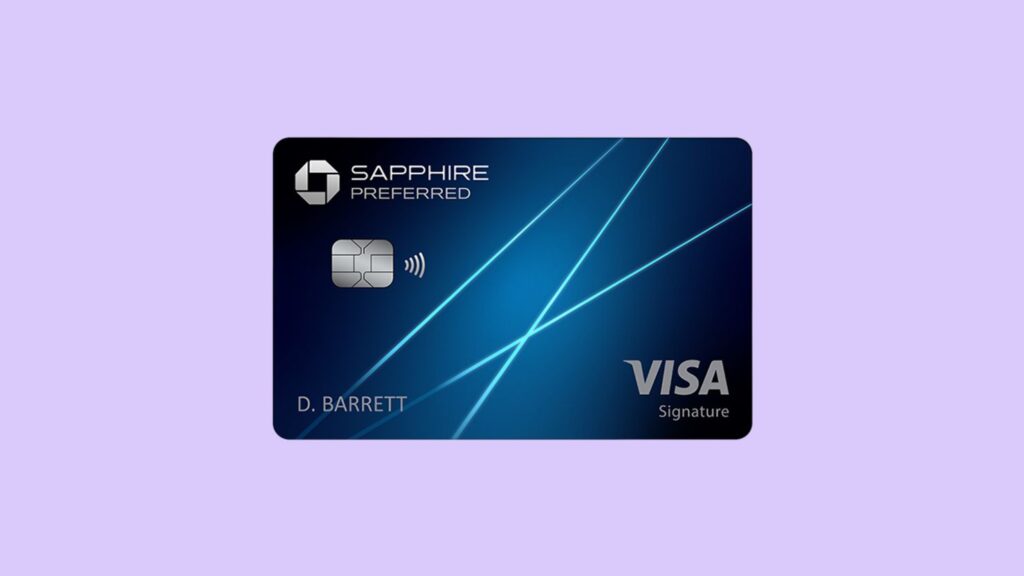
3x on streaming and online groceries The Reserve earns only 1x on streaming services and online grocery purchases. For households spending $100+/month on streaming subscriptions and grocery delivery, the Preferred’s 3x generates meaningful additional points — 2 extra points per dollar that the Reserve doesn’t earn.
Lower barrier to positive ROI At $45 effective annual fee, the Preferred requires very little spend to justify. A cardholder spending $200/month on dining earns approximately 7,200 points/year from dining alone — worth $90 via Chase Travel or $100+ via transfer partners. The card pays for itself in dining spend alone at well under $200/month.
Better welcome bonus math Both cards offer 60,000-point welcome bonuses, but the Preferred’s lower spend threshold ($4,000 in 3 months vs the Reserve’s same requirement) combined with the lower annual fee makes the Year 1 net value higher for moderate spenders.
The right first travel card For cardholders opening their first travel card, the Preferred’s lower fee makes it easier to evaluate whether Chase’s ecosystem works for your travel habits before committing to the Reserve’s premium fee.
Where the Sapphire Reserve Wins
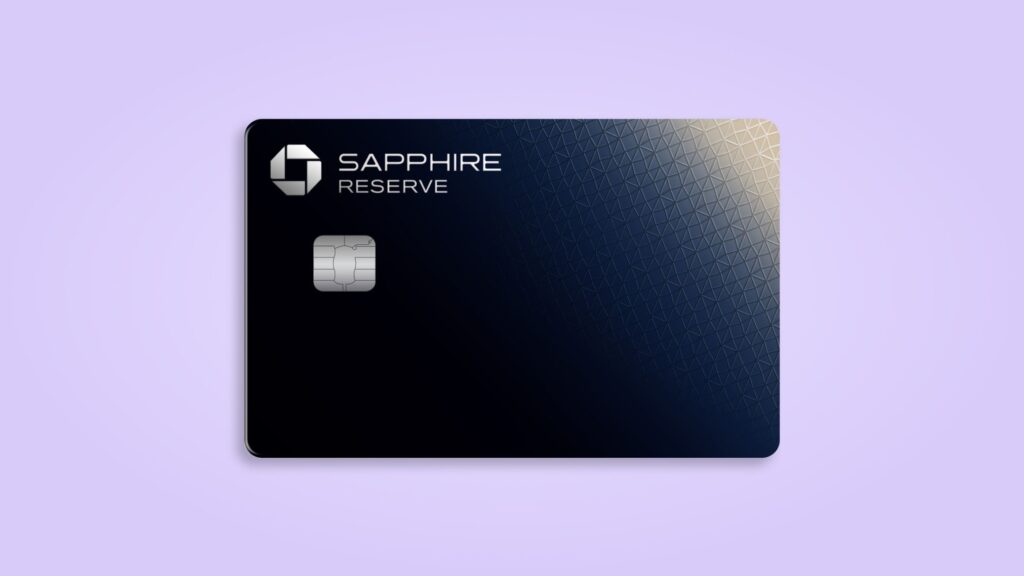
3x on all travel — not just Chase Travel The Reserve earns 3x on every travel purchase — every airline, every hotel, every Airbnb, every Uber and Lyft, every parking garage. The Preferred earns 2x. On $500/month in total travel spending, that extra point per dollar generates 6,000 additional points per year — worth $90–$120 depending on redemption method.
1.5¢ portal value vs 1.25¢ Points are worth 25% more through Chase Travel when you hold the Reserve. 60,000 points = $900 via Reserve portal vs $750 via Preferred portal. For cardholders who prefer portal bookings over transfer partners, this difference matters significantly.
Priority Pass airport lounge access The Reserve includes unlimited Priority Pass Select membership — access to 1,300+ airport lounges worldwide for the cardholder and guests. A typical lounge visit costs $35–$50 at the door. A cardholder who uses lounges 8+ times per year ($280–$400 in door fees) breaks even on this benefit alone.
$300 travel credit flexibility The Preferred’s $50 hotel credit only applies to hotel bookings through Chase Travel. The Reserve’s $300 credit applies to any travel purchase — flights, hotels, Airbnb, Uber, parking, transit. The flexibility makes the Reserve’s credit significantly easier to fully utilize.
The Break-Even Analysis: When Does the Reserve Pay Off?
The Reserve costs approximately $225 more per year than the Preferred (after credits). To justify the upgrade, those extra $225 must come from the Reserve’s additional benefits.
Scenario A: Lounge user, moderate travel spender
| Benefit | Annual Value |
|---|---|
| Priority Pass (10 visits × $40) | $400 |
| Extra 1x on $500/month travel | $60–$90 in points |
| 1.5¢ vs 1.25¢ portal value on 50K pts | $125 |
| TSA PreCheck credit (annualized) | $25 |
| Total extra value | $610–$640 |
| Extra cost vs Preferred | $225 |
| Net advantage | $385–$415/year |
Verdict: Reserve wins decisively for a cardholder who uses airport lounges 10+ times per year.
Scenario B: Non-lounge user, moderate spender
| Benefit | Annual Value |
|---|---|
| Extra 1x on $300/month travel | $36–$54 in points |
| 1.5¢ vs 1.25¢ portal value on 30K pts | $75 |
| TSA PreCheck credit (annualized) | $25 |
| Total extra value | $136–$154 |
| Extra cost vs Preferred | $225 |
| Net advantage | −$71 to −$89/year |
Verdict: Preferred wins for non-lounge users with moderate travel spending. The Reserve costs more than it returns.
Transfer Partners: Same for Both
Both cards access the exact same 14 Chase Ultimate Rewards transfer partners at 1:1 ratio — this is the feature that makes both cards genuinely exceptional:
Airlines: United MileagePlus, Southwest Rapid Rewards, British Airways Avios, Air France/KLM Flying Blue, Virgin Atlantic, Singapore Airlines KrisFlyer, Iberia Plus, Aer Lingus, Emirates Skywards, Air Canada Aeroplan, Cathay Pacific Asia Miles
Hotels: World of Hyatt, Marriott Bonvoy, IHG One Rewards
The best single transfer available on either card: 25,000 points to World of Hyatt for a Category 4 hotel night worth $200–$300. This redemption alone can return 2–3¢ per point — significantly above the 1.25–1.5¢ portal value on either card.
For the full breakdown of transfer partner strategy and which redemptions offer the highest value, see our best travel credit cards USA guide.
The Two-Card Strategy: Hold Both
Many experienced Chase cardholders hold both the Sapphire Preferred and the Chase Freedom Unlimited or Freedom Flex — combining the Preferred’s transfer partner access and primary rental car coverage with the Freedom cards’ 5% rotating categories and 3% dining at zero annual fee.
If you’re considering the Reserve specifically for the lounge access, consider this alternative: the Capital One Venture X ($395/year, ~$-5 effective fee after credits) also includes Priority Pass access and earns 2x everywhere — at a lower effective cost than the Reserve. See our Capital One Venture Rewards review for the full comparison.
Which Card Should You Get?
Choose the Chase Sapphire Preferred if:
- This is your first travel card
- You spend primarily on dining, streaming, and groceries (not raw travel)
- You travel 2–4 times per year and don’t use airport lounges
- You want strong transfer partner access at the lowest possible fee
- You prefer to evaluate Chase’s ecosystem before committing to $550/year
Choose the Chase Sapphire Reserve if:
- You travel 6+ times per year and use airport lounges consistently
- You spend $500+/month across all travel categories
- You book through Chase Travel regularly and want the 1.5¢ portal value
- You have TSA PreCheck or Global Entry and are due for renewal
- You’re already comfortable with Chase’s ecosystem from holding the Preferred
Hold the Preferred now, upgrade later if:
- Your travel patterns are growing but not yet at Reserve-justification level
- You want to test whether you’ll use the Reserve’s premium benefits before committing
- You’ve held the Preferred for 12+ months and your spending has increased significantly
People Also Ask
Is the Chase Sapphire Reserve worth the $550 annual fee?
The Chase Sapphire Reserve is worth $550/year for frequent travelers who fully utilize the $300 travel credit (reducing effective fee to ~$250) and use Priority Pass airport lounges 6+ times per year. At 8 lounge visits annually ($280–$320 in equivalent door fees), lounge access alone covers the fee difference versus the Preferred. For moderate travelers who rarely use lounges, the Preferred’s $45 effective fee delivers better value.
What credit score do I need for the Chase Sapphire Preferred?
The Chase Sapphire Preferred typically approves applicants with a Good credit score of 700 or above. The Chase Sapphire Reserve generally requires 720 or higher due to its premium positioning. Both are subject to Chase’s 5/24 rule — applicants who have opened 5 or more credit cards in the past 24 months are automatically declined regardless of credit score.
Can I upgrade from the Sapphire Preferred to the Reserve?
Yes. Chase allows product changes between Sapphire products — you can request an upgrade from the Preferred to the Reserve by calling the number on the back of your card. The upgrade does not trigger a new hard inquiry and you keep your existing account history. Note: you cannot receive a welcome bonus on the Reserve if you’ve received a Sapphire bonus within the past 48 months.
Do Chase Sapphire points expire?
Chase Ultimate Rewards points do not expire as long as your account remains open and in good standing. If you close your Sapphire card without transferring points to another Chase account or travel partner, unused points may be forfeited. Always transfer points before closing the account.
What is the Chase 5/24 rule?
Chase’s 5/24 rule automatically declines applications from cardholders who have opened 5 or more credit card accounts — from any issuer, not just Chase — in the past 24 months. This rule applies to virtually all Chase credit cards, including both Sapphire products. Check your recent account openings before applying.
Is the Chase Sapphire Preferred good for beginners?
Yes — the Chase Sapphire Preferred is one of the best first travel cards available in the US market. At $45 effective annual fee, it provides access to 14 transfer partners, primary rental car coverage, trip cancellation insurance, and 3x on dining — making it an exceptional value for cardholders new to travel rewards. For more on first credit card strategy, see our how to get approved for your first credit card guide.
Final Thoughts
The Chase Sapphire Preferred vs. Reserve debate has a clear answer for most Americans: start with the Preferred.
The $45 effective annual fee gives you access to the same 14 transfer partners, the same primary rental car coverage, and the same dining rewards as the Reserve — at less than one-fifth the cost. For cardholders who grow into heavier travel patterns, lounge usage, and higher monthly spend, upgrading to the Reserve later is always an option and doesn’t require a new application.
The Reserve is genuinely exceptional for the right cardholder. But that cardholder needs to be flying frequently, using lounges consistently, and spending enough on travel and dining to extract the premium benefits that justify the premium fee.
Know your spending. Run the math. Pick the card that pays you back.
For more credit card comparisons, rewards strategies, and personal finance guides built for US consumers, visit CreditPilotUSA.com — your trusted co-pilot for navigating the world of credit.
Disclaimer: Card terms, point valuations, annual fees, and benefits are subject to change. Always verify current offers directly with Chase before applying. This article is for educational purposes only and does not constitute financial advice.

Danilo is a Credit Analyst and the Founder of CreditPilotUSA.com. With deep expertise in the credit card industry, he translates complex banking news and reward systems into actionable financial strategies. Dedicated to helping Americans master their credit scores and maximize the cards in their wallets.