

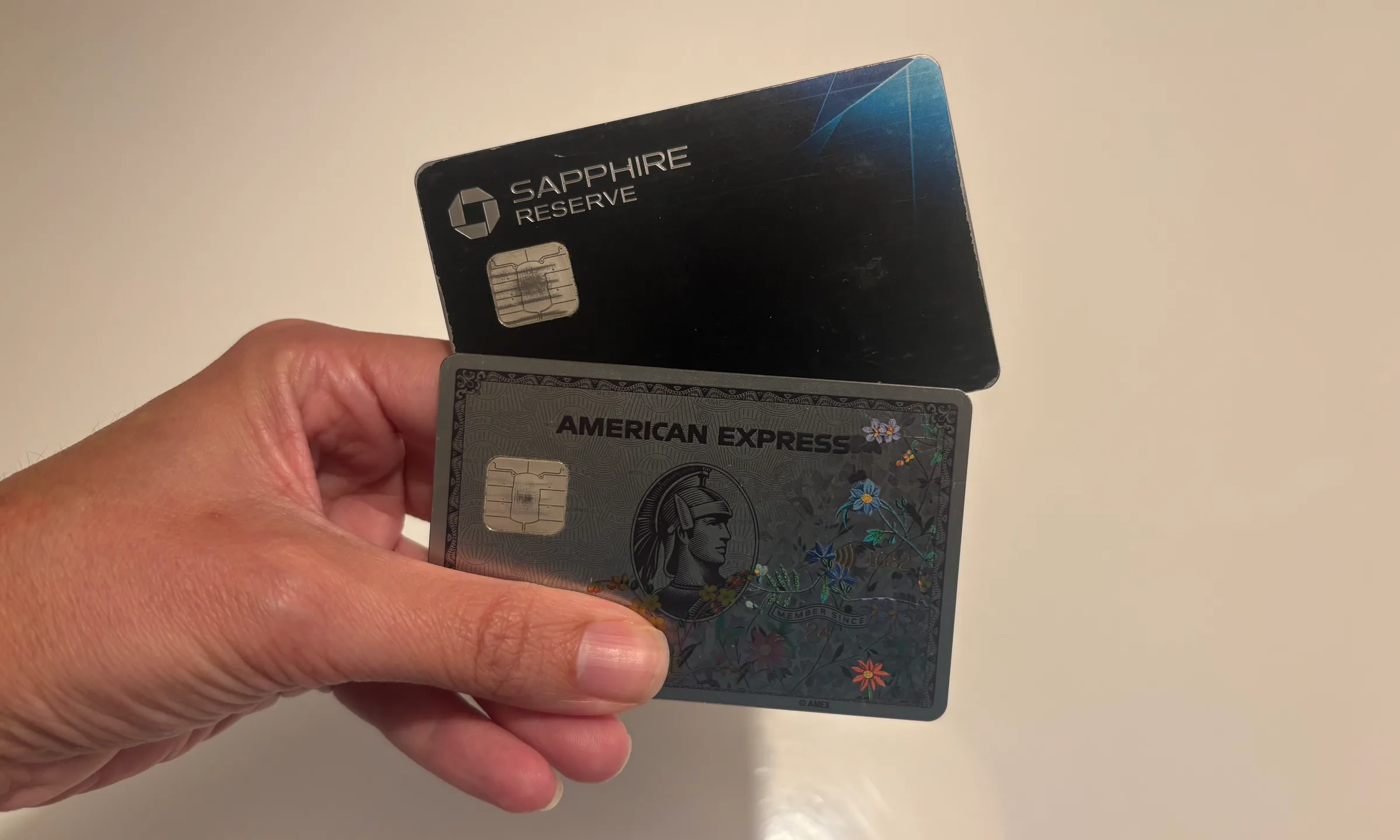
Two credit card ecosystems dominate the rewards conversation in the United States — and choosing the wrong one for your spending profile costs hundreds of dollars per year in unrealized rewards.
The Chase Trifecta and the Amex Trifecta are both multi-card strategies built around a single points currency. Chase runs on Ultimate Rewards. Amex runs on Membership Rewards. Both currencies transfer to airline and hotel partners. Both can unlock premium cabin redemptions worth 2–3 cents per point. Both require holding multiple cards simultaneously to capture maximum earn rates across all spending categories.
But the cards are different, the transfer partners are different, the annual fees are different, and the spending categories that earn the most are different. Picking the right ecosystem for your household is one of the highest-leverage financial decisions available to American cardholders in 2026.
This guide runs the full comparison — ecosystem by ecosystem, card by card, category by category — and delivers a clear verdict based on your spending profile.
Editorial note: CreditPilotUSA.com evaluates credit card strategies based on real annual value and fee structure. Cards are selected independently — we are not paid to feature specific products.
Last updated: March 2026
Quick Answer
The Chase Trifecta wins for most American households in 2026 — particularly those who spend heavily on dining, travel, and everyday purchases and want the most flexible transfer partner network for domestic travel. The Amex Trifecta wins for food-first households spending $500+/month on groceries and dining combined, frequent international travelers who use Centurion Lounges, and cardholders who fly partners like ANA, British Airways, or Air France regularly. Neither ecosystem is universally superior — the right choice depends on where you spend.
What Is the Chase Trifecta?
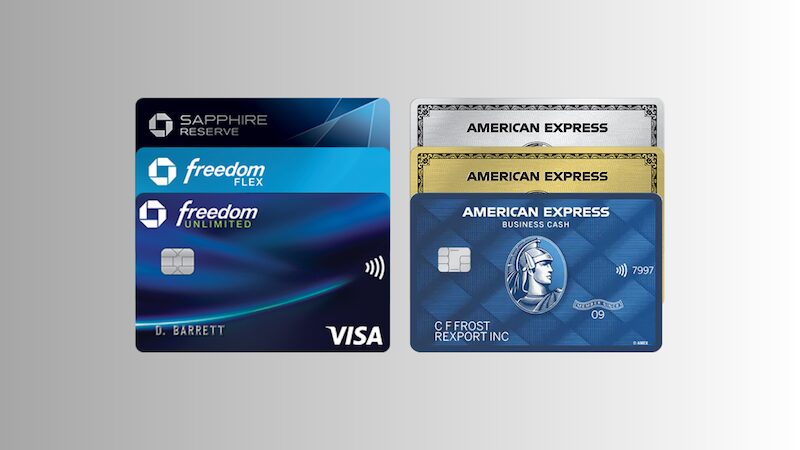
The Chase Trifecta combines three Chase cards to capture maximum earning rates across all major spending categories while routing points through a single Ultimate Rewards account.
The classic combination:
| Card | Annual Fee | Primary Role |
|---|---|---|
| Chase Sapphire Preferred® or Reserve® | $95 or $550 | Hub card — portal bookings, transfer partners, dining |
| Chase Freedom Unlimited® | $0 | Base card — 1.5% on everything, 3% dining |
| Chase Freedom Flex℠ | $0 | Maximizer — 5% rotating categories (Amazon, groceries, gas, etc.) |
How the points stack:
- Freedom Flex earns 5% during rotating bonus quarters (groceries, Amazon, gas, restaurants)
- Freedom Unlimited earns 3% on dining and drugstores, 1.5% everywhere else
- The Sapphire card converts all accumulated cashback from the two Freedom cards into transferable Ultimate Rewards points — worth 1.25–1.5¢ each via the portal, or 2–3¢+ when transferred to airline partners
The Freedom cards earn “cashback” that becomes fully transferable points only when paired with a Sapphire card. Without the Sapphire, you’re earning cashback at lower effective value. The Sapphire is the key that unlocks the ecosystem.
Total annual fee (with Sapphire Preferred): $95 Total annual fee (with Sapphire Reserve): $550 ($250 effective after $300 travel credit)
What Is the Amex Trifecta?
The Amex Trifecta combines three American Express cards to maximize Membership Rewards earnings across food, travel, and everyday spending — with access to Amex’s 21-partner transfer network.
The classic combination:
| Card | Annual Fee | Primary Role |
|---|---|---|
| American Express Platinum® | $695 | Hub card — lounge access, travel credits, 5x on flights |
| American Express Gold Card® | $250 (~$10 effective) | Food card — 4x dining worldwide, 4x US supermarkets |
| American Express Blue Business Plus® | $0 | Base card — 2x on all purchases (up to $50,000/year) |
How the points stack:
- Gold earns 4x at restaurants worldwide and US supermarkets — the highest food earn rate on any mainstream US card
- Platinum earns 5x on flights booked directly with airlines or through Amex Travel
- Blue Business Plus earns 2x on all other purchases — covering everything the other two don’t
- All three cards earn Membership Rewards points that pool into one account
Total annual fee: $945 ($695 Platinum + $250 Gold + $0 Blue Business Plus) Effective total fee (after credits): approximately $200–$250/year after Platinum and Gold credits
Head-to-Head: Category by Category
Dining
Chase Trifecta: 3x points on dining via Freedom Unlimited and Sapphire cards Amex Trifecta: 4x points on dining worldwide via Amex Gold
Winner: Amex Trifecta 4x beats 3x on every restaurant dollar. At $600/month in dining spend, the Amex Trifecta earns 7,200 more points per month — worth $72–$144 more depending on redemption method.
Groceries
Chase Trifecta: 5% during rotating bonus quarters (when grocery stores are featured), 1.5% otherwise Amex Trifecta: 4x year-round via Amex Gold at US supermarkets
Winner: Depends on your shopping patterns Amex wins on consistency — 4x every month, no activation required. Chase wins if you concentrate spending during the Q1 grocery bonus quarter and hit the $1,500 cap. For households that shop year-round at traditional US supermarkets, Amex’s 4x flat is more reliable. For more on the best grocery cards specifically, see our best credit cards for groceries in the USA guide.
Flights
Chase Trifecta: 2–3x on travel via Sapphire; 5x on flights booked through Chase Travel with Reserve Amex Trifecta: 5x on flights booked directly with airlines or through Amex Travel
Winner: Amex Trifecta (for direct airline bookings) Amex’s 5x on direct airline purchases applies year-round without a portal requirement. Chase’s 5x requires booking through Chase Travel, which restricts flexibility. Frequent flyers who book directly with airlines gain meaningfully more Membership Rewards.
Everyday Purchases
Chase Trifecta: 1.5x via Freedom Unlimited on everything else Amex Trifecta: 2x via Blue Business Plus on all purchases up to $50,000/year
Winner: Amex Trifecta 2x beats 1.5x on non-category spending. For a household running $2,000/month in everyday purchases outside dining, groceries, and travel, the Amex Trifecta earns 48,000 extra points per year from this single difference — worth $480–$960 depending on transfer partner redemptions.
Airport Lounges
Chase Trifecta: Priority Pass Select via Sapphire Reserve — 1,300+ lounges worldwide Amex Trifecta: Centurion Lounges (Amex’s own network) + Priority Pass + Delta Sky Clubs (on Delta flights) via Platinum
Winner: Amex Trifecta (for premium lounge access) Centurion Lounges are widely regarded as the best domestic airport lounges in the US market — significantly nicer than the typical Priority Pass lounge. For frequent domestic US flyers, the Centurion access alone can justify the Platinum’s premium fee difference. For the full comparison of Sapphire cards and their benefits, see our Chase Sapphire Preferred vs Reserve guide.
Transfer Partners
Chase Ultimate Rewards — 14 partners: United MileagePlus, Southwest Rapid Rewards, British Airways Avios, Air France/KLM Flying Blue, Virgin Atlantic, Singapore Airlines KrisFlyer, Iberia, Aer Lingus, Emirates, Air Canada Aeroplan, Cathay Pacific, World of Hyatt, Marriott Bonvoy, IHG One Rewards
Amex Membership Rewards — 21 partners: Delta SkyMiles, British Airways Avios, Air France/KLM Flying Blue, ANA Mileage Club, Emirates Skywards, Singapore Airlines KrisFlyer, Virgin Atlantic, Cathay Pacific, Aer Lingus, Iberia, Avianca LifeMiles, Air Canada Aeroplan, ANA, Hilton Honors, Marriott Bonvoy, Choice Privileges, and more
The most valuable transfers by ecosystem:
| Ecosystem | Best Transfer | Value |
|---|---|---|
| Chase | World of Hyatt | 25k pts = Category 4 hotel (~$250 value) |
| Chase | United Airlines | Business class domestic at 35k pts |
| Amex | ANA Mileage Club | 88k pts = round-trip US↔Japan business class (~$6,000 value) |
| Amex | Air France/KLM | 50k pts = business class to Europe on partner airlines |
Winner: Amex Trifecta (for international premium cabin redemptions) Amex’s 21 partners include ANA — consistently ranked as the highest single-redemption value available to US cardholders. Chase’s 14 partners are excellent for domestic travel and Hyatt hotels but don’t include a comparable international business class sweet spot.
Winner: Chase Trifecta (for domestic travel and hotel flexibility) World of Hyatt is arguably the best hotel transfer program available to US cardholders. And Southwest’s Companion Pass — achievable partly through Chase Rapid Rewards earning — is one of the most valuable domestic travel benefits in the market.
Annual Fee Comparison
| Strategy | Nominal Fees | Effective Fees (after credits) |
|---|---|---|
| Chase Trifecta (Preferred) | $95 | ~$45 |
| Chase Trifecta (Reserve) | $550 | ~$250 |
| Amex Trifecta | $945 | ~$200–$250 |
At the effective fee level, the Amex Trifecta and Chase Reserve Trifecta cost roughly the same after credits. The Chase Preferred Trifecta is significantly cheaper — making it the stronger value proposition for households that don’t need Centurion lounge access.
Annual Value Comparison — Real Household Spending
Hypothetical household: $500/month dining, $400/month groceries, $400/month travel, $700/month other
Chase Trifecta (with Sapphire Preferred)
| Category | Monthly Spend | Earn Rate | Monthly Points |
|---|---|---|---|
| Dining (Freedom Unlimited) | $500 | 3x | 1,500 |
| Groceries (Freedom Flex, Q1 bonus) | $400 | 5x (1 quarter), 1.5x (3 quarters) | ~700 avg |
| Travel (Sapphire Preferred) | $400 | 2x | 800 |
| Everything else (Freedom Unlimited) | $700 | 1.5x | 1,050 |
| Annual total | ~48,600 pts |
Portal value at 1.25¢: $607/year Transfer value (estimated): $730–$972/year Effective annual fee: $45 Net annual value: $562–$927
Amex Trifecta
| Category | Monthly Spend | Earn Rate | Monthly Points |
|---|---|---|---|
| Dining (Amex Gold) | $500 | 4x | 2,000 |
| Groceries (Amex Gold) | $400 | 4x | 1,600 |
| Flights (Amex Platinum) | $400 | 5x | 2,000 |
| Everything else (Blue Business Plus) | $700 | 2x | 1,400 |
| Annual total | ~84,000 pts |
Portal value at 1¢: $840/year Transfer value (estimated): $1,260–$2,520/year (via ANA, Air France, etc.) Effective annual fee: ~$225 Net annual value: $615–$2,295
The math is clear: at this spending profile, the Amex Trifecta earns significantly more points annually — and the transfer partner ceiling is substantially higher. But the range is wide: a cardholder who redeems for statement credits extracts less value than one who books ANA business class.
The 5/24 Rule — A Critical Chase Constraint
One factor that doesn’t exist in the Amex ecosystem: Chase’s 5/24 rule.
Chase automatically declines applications from cardholders who have opened 5 or more new credit card accounts — from any issuer — in the past 24 months. This rule applies to all Sapphire products and both Freedom cards.
If you’ve been building a card portfolio aggressively — opening several cards across multiple issuers — you may be locked out of the Chase ecosystem entirely until enough accounts age past 24 months.
Amex has no equivalent blanket policy, though it does limit welcome bonuses to once per card per lifetime.
Practical implication: If you’re planning to build a trifecta from scratch, apply for Chase cards first (before opening Amex or other issuer cards), or count your recent openings carefully before applying. For the full breakdown of the approval process and how long it takes, see our how long to get approved for a credit card guide.
Which Trifecta Should You Choose?
Choose the Chase Trifecta if:
- You spend heavily on domestic travel and want to use Southwest, United, and World of Hyatt
- You want lower effective annual fees — the Preferred Trifecta costs $45/year after credits
- You value flexibility and simplicity over maximum ceiling value
- You’re concerned about Amex acceptance — Amex is less widely accepted than Visa/Mastercard, especially at smaller merchants and internationally
- You’re new to travel rewards and want to start with a manageable ecosystem
Choose the Amex Trifecta if:
- You spend $400+/month combined on dining and groceries — the 4x Gold category is the ecosystem’s core advantage
- You fly internationally and want access to ANA, Air France/KLM, or other premium partners
- You use airport lounges regularly and value Centurion access over Priority Pass
- You’re willing to put in the work to maximize transfer partner redemptions for premium cabins
- You’re comfortable with the higher nominal fees and can use all available credits
Hold both if:
A growing number of experienced cardholders hold cards from both ecosystems — using Chase for domestic hotel and travel redemptions (Hyatt is unmatched) and Amex for international flight redemptions (ANA, Air France). The combination captures the best of both transfer networks, though it requires managing more cards and annual fees across two ecosystems.
Frequently Asked Questions
What is the Chase Trifecta?
The Chase Trifecta is a multi-card strategy combining a Chase Sapphire card (Preferred or Reserve) with the Chase Freedom Unlimited and Chase Freedom Flex. The Sapphire card unlocks transferable Ultimate Rewards points from all three cards. Together, they earn 5% on rotating categories, 3% on dining year-round, and 1.5% on all other purchases — pooled into one transferable currency with 14 airline and hotel partners.
What is the Amex Trifecta?
The Amex Trifecta combines the American Express Platinum, American Express Gold, and American Express Blue Business Plus. Together they earn 5x on flights, 4x on dining and US supermarkets, and 2x on everything else — all in Membership Rewards points transferable to 21 airline and hotel partners. The effective annual fee after credits is approximately $200–$250 for most cardholders who use all available credits.
Is Chase or Amex better for travel rewards?
It depends on how you travel. Chase is better for domestic US travel — World of Hyatt is the strongest hotel transfer program available to US cardholders, and Southwest and United cover most domestic routes efficiently. Amex is better for international premium cabin travel — the ANA Mileage Club transfer (88,000 points for round-trip business class US–Japan) is the highest single-redemption value available to any US cardholder.
Can I have both Chase and Amex trifectas?
Yes — and many experienced rewards cardholders do. Holding both ecosystems simultaneously gives you access to 35 combined transfer partners, maximizing your ability to find award availability and value across different routes and hotel chains. The challenge is managing multiple annual fees and card spending requirements simultaneously.
Does the Amex Gold count toward Chase 5/24?
No — Amex cards do not count toward Chase’s 5/24 rule because they are not reported as new accounts on your credit report in the same way most bank-issued cards are. This means you can open Amex cards without affecting your Chase 5/24 count, though American Express business cards generally do not appear on personal credit reports at all. Always verify current Chase 5/24 policy before applying.
Final Thoughts
The Chase Trifecta and Amex Trifecta are both exceptional rewards strategies. The right one isn’t the one with the higher theoretical ceiling — it’s the one that earns the most on what your household actually buys.
For most American families, the Chase Preferred Trifecta at $45 effective annual fee delivers outstanding value with lower complexity and broader domestic travel utility. For food-forward households who dine out frequently, buy most groceries at traditional supermarkets, and want access to international premium cabin programs, the Amex Trifecta’s higher earning rates justify the additional fee investment.
Know your spending. Run your numbers. And once you’ve picked an ecosystem, work it consistently — the most powerful thing about either trifecta isn’t the individual card rates. It’s the compounding effect of routing years of household spending through a single transferable currency.
For more credit card comparisons, rewards strategies, and personal finance guides built for US consumers, visit CreditPilotUSA.com — your trusted co-pilot for navigating the world of credit.
Disclaimer: Card terms, annual fees, transfer partners, and earn rates are subject to change. Point valuations are estimates based on typical redemption patterns and do not represent guaranteed returns. Always verify current offers directly with each issuer before applying. This article is for educational purposes only.

Danilo is a Credit Analyst and the Founder of CreditPilotUSA.com. With deep expertise in the credit card industry, he translates complex banking news and reward systems into actionable financial strategies. Dedicated to helping Americans master their credit scores and maximize the cards in their wallets.