

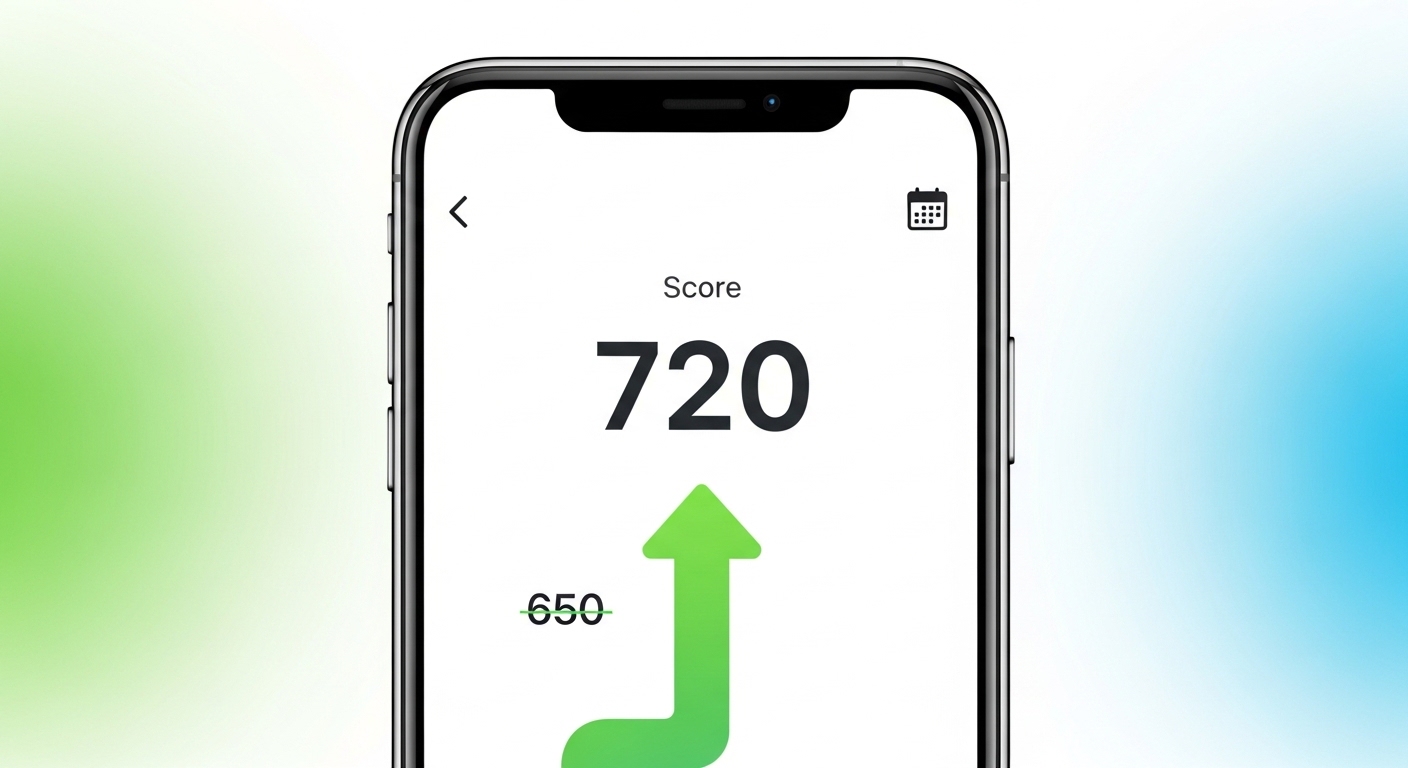
Most people pay their credit card bill once a month. On the due date. In full or with the minimum. And they think that’s enough.
It is — for avoiding late fees. But it’s not enough for maximizing your credit score.
There is a payment strategy that most Americans have never heard of, costs nothing to implement, and can add 30 to 80 points to your FICO score within a single billing cycle. It requires no new accounts, no credit repair, no disputes — just a different understanding of when your card balance gets reported to the credit bureaus.
Here’s exactly how it works.
Editorial note: CreditPilotUSA.com provides credit education based on FICO scoring methodology. This article is for educational purposes only and does not constitute financial or legal advice.
Last updated: March 2026
The Strategy: Pay Before Your Statement Closing Date
Here is the single most important thing most credit cardholders don’t know:
Your credit score is not updated on your payment due date. It’s updated when your card issuer reports your balance to the credit bureaus — which happens on your statement closing date.
The statement closing date is typically 3–4 weeks before your payment due date. Whatever balance your account carries at that moment is the number that gets reported to Equifax, Experian, and TransUnion. That number becomes your credit utilization ratio — one of the most powerful inputs in your entire FICO score.
The strategy is simple: pay your balance down to below 10% of your credit limit before your statement closes — not just before the payment due date.
When you do this, the bureau receives a low balance report. Your utilization drops. Your score rises. And you still have the full grace period to pay off whatever small amount remains before interest kicks in.
You get the high score and the zero-interest benefit. Simultaneously.
Why This Works: The Credit Utilization Factor
Your FICO score is calculated across five factors. Two of them are directly impacted by this strategy:
| FICO Factor | Weight | How This Strategy Helps |
|---|---|---|
| Payment History | 35% | On-time payments = positive history building |
| Credit Utilization | 30% | Lower reported balance = lower utilization = higher score |
| Length of Credit History | 15% | Not affected |
| Credit Mix | 10% | Not affected |
| New Credit | 10% | Not affected |
Payment history (35%) rewards consistent on-time payments. This strategy doesn’t change that — you still pay on time. But it also doesn’t hurt you if you occasionally carry a small balance through the statement date.
Credit utilization (30%) is the lever this strategy targets directly. According to myFICO, people with FICO scores above 800 carry an average utilization of under 7%. People with scores in the 650–700 range average 30–50% utilization. That gap in reported balances — not behavior, not history, just the number on the statement — explains much of the scoring difference.
The utilization factor is also highly responsive. Unlike payment history, which builds slowly over months and years, utilization changes reflect in your score within one billing cycle — as soon as the lower balance is reported. This makes it the fastest legitimate credit score lever available to any American cardholder.
The Exact Payment Timeline
Here’s how a single billing cycle looks under this strategy:
Month: March

March 1   → Statement from February closes. Old balance reported.
March 5   → You pay off the February balance in full (by due date).
March 6   → You continue using the card normally through March.
March 22  → 5–7 days before March statement closes, check your balance.
March 25  → Pay balance down to under 10% of your credit limit.
March 31  → March statement closes. Low balance (under 10%) is reported.
April 22  → Due date arrives. Pay the small remaining balance. Zero interest.

Result: Bureaus see under 10% utilization. Score reflects the lower balance.
This requires one additional monthly payment — a transfer from your bank account to your credit card before the statement closes. It takes less than two minutes and costs nothing.
How Much Can This Actually Move Your Score?
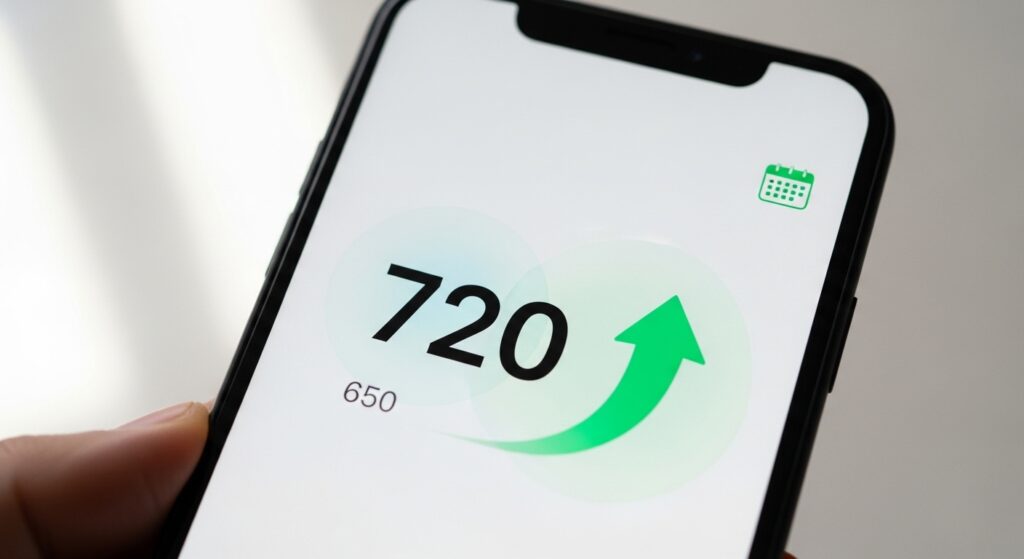
The answer depends on where you’re starting from — but the directional impact is consistent across all credit profiles:
| Starting Score | Current Utilization | After Strategy (Under 10%) | Estimated Score Impact | Speed |
|---|---|---|---|---|
| 550–600 | 70–90% | Under 10% | +50 to +80 points | 1–2 billing cycles |
| 600–650 | 50–70% | Under 10% | +40 to +60 points | 1 billing cycle |
| 650–700 | 30–50% | Under 10% | +25 to +45 points | 1 billing cycle |
| 700–740 | 15–30% | Under 10% | +15 to +25 points | 1 billing cycle |
| 740–780 | 10–15% | Under 7% | +10 to +15 points | 1 billing cycle |
These are estimates based on FICO scoring patterns — not guarantees. Individual results depend on the full credit profile, total number of accounts, and other factors. But the direction is consistent: lower reported utilization produces measurable score improvement within one billing cycle for virtually every cardholder.
For more on what score range unlocks in terms of loan rates and card approvals, see our full guide on what is a good credit score in the USA.
The Second Level: How to Maximize This Strategy
Once you understand the core habit, these refinements push the impact further.
Keep Utilization Below 10% — Not Just Below 30%
Most personal finance content says to keep utilization “under 30%.” This is outdated advice calibrated for avoiding score damage — not for maximizing score.
People with 800+ scores typically carry under 7% utilization. The sweet spot for score optimization is:
- Under 30% — avoids significant score damage
- Under 10% — actively builds toward 740–760 range
- Under 7% — targets 780–800+ range
Each tier produces a scoring difference. If you’re targeting a specific score for a mortgage, auto loan, or premium travel card application, the difference between reporting 12% and 6% utilization can be the difference between two approval tiers.
Spread Utilization Across Multiple Cards
Your FICO score evaluates utilization in two ways: aggregate (total balances ÷ total limits) and per-card (individual card balance ÷ individual card limit). Both matter.
A single card at 80% utilization hurts your score even if your total utilization across all cards is low. If you have multiple cards, distribute spending so no individual card exceeds 20% before the statement closes — ideally keeping each card below 10%.
Time Large Purchases Strategically
Planning a large purchase — furniture, electronics, a vacation booking? Make the purchase immediately after your statement closes rather than immediately before. This gives you a full billing cycle to pay the balance down before it gets reported, instead of having the full charge show up on the next statement.
This timing costs nothing and potentially saves 10–30 points on the report cycle that matters.
🛡️ Your credit score is only half the picture.
See our full comparison of the best credit monitoring services in the USA — or jump straight to our #1 pick: Start monitoring with SmartCredit today →
What This Strategy Cannot Fix
Knowing the limits is as important as knowing the benefits.
It doesn’t erase negative history. A late payment from 18 months ago stays on your report for 7 years. Utilization optimization raises your score on top of that history — it doesn’t remove it. For strategies to address negative items, see our guide on mistakes that hurt your credit score.
It requires available cash. This strategy works by paying your balance early — which means the money needs to be in your bank account before the statement closes, not just before the due date. If cash flow is tight, even a partial paydown (from 60% to 25% utilization) still produces meaningful score improvement.
It doesn’t help if you have no credit history. Utilization optimization requires open, active accounts. If you’re starting from zero, the first step is opening a starter card. See our guide on 10 best credit cards for beginners or our Petal 2 review for no-credit-history options.
It doesn’t substitute for on-time payments. If you’re currently missing payments, fixing that (35% of your score) takes priority over utilization management (30%). Both matter — but payment history comes first.
How to Find Your Statement Closing Date
Most cardholders don’t know their statement closing date off the top of their head. Here’s how to find it in under 60 seconds:
- Log into your card’s mobile app → tap “Statements” or “Account Activity” → the closing date appears at the top of your most recent statement
- Log into your card’s website → navigate to “Statements” → the closing date is listed on each statement
- Call the number on the back of your card → ask a representative for your current billing cycle closing date
Once you have it, set a recurring calendar reminder 5–7 days before the closing date each month. That’s your payment window.
Track Your Progress With Free Tools
Two free tools let you monitor the impact of this strategy in real time:
Credit Karma — shows VantageScore from TransUnion and Equifax, updated weekly. Use it to watch your utilization percentage change after each payment and see the score impact in near real time.
Experian app — shows your official FICO Score 8 from Experian, updated monthly. This is the score most lenders pull — the one that matters for mortgage pre-approvals, auto loans, and premium card applications.
For a full comparison of monitoring tools at every stage of credit building, see our best apps to improve your credit score guide.
Frequently Asked Questions
What is the best payment strategy for building credit?
The most effective payment strategy for building credit combines two actions: paying on time every month (which builds payment history, 35% of your FICO score), and paying your balance down before your statement closing date (which lowers reported utilization, 30% of your score). Together, these two habits target 65% of your entire FICO score and can produce measurable score improvement within one billing cycle.
How does credit utilization affect my credit score?
Credit utilization — the ratio of your reported balance to your available credit limit — accounts for approximately 30% of your FICO score. The lower your reported utilization, the higher your score. People with FICO scores above 800 carry an average utilization under 7%. Dropping from 50% to under 10% utilization can add 40–60 points within a single billing cycle.
Should I pay my credit card twice a month?
Yes — strategically. Making one payment before your statement closing date (to reduce the balance that gets reported) and one payment on or before the due date (to avoid interest and late fees) is the most effective two-payment approach. The pre-statement payment is what moves your credit score. The due-date payment is what avoids interest charges.
Does paying in full every month build credit?
Paying in full every month builds payment history and avoids interest — both important. But it does not automatically produce a low utilization score if you carry a high balance up to the statement closing date and then pay it. For maximum score building, pay down to under 10% of your limit before the statement closes, then pay the remainder by the due date.
How quickly can I improve my credit score with this strategy?
Most cardholders see measurable score improvement within one billing cycle — approximately 30 days — after implementing this strategy. The change reflects as soon as the lower balance is reported to the credit bureaus and processed into your FICO score. Cardholders reducing from very high utilization (50%+) to under 10% often see the largest gains in the shortest time.
Final Thoughts
The difference between a 640 credit score and a 720 credit score is often not behavior — it’s timing.
Millions of Americans pay their bills responsibly every month and still carry mid-range scores because their reported utilization tells the bureaus a different story than their actual financial habits. One small adjustment — paying before the statement closes instead of before the due date — corrects that story without changing anything else.
Set the calendar reminder. Make the extra payment. Watch the number move.
For more credit strategies, card recommendations, and financial guides built for US consumers, visit CreditPilotUSA.com — your trusted co-pilot for navigating the world of credit.
Disclaimer: Credit score improvements vary based on individual credit profiles. FICO scoring models are proprietary and subject to change. Estimates in this article are based on general scoring patterns and do not represent guaranteed results. Information provided is for educational purposes only.

Danilo is a Credit Analyst and the Founder of CreditPilotUSA.com. With deep expertise in the credit card industry, he translates complex banking news and reward systems into actionable financial strategies. Dedicated to helping Americans master their credit scores and maximize the cards in their wallets.