

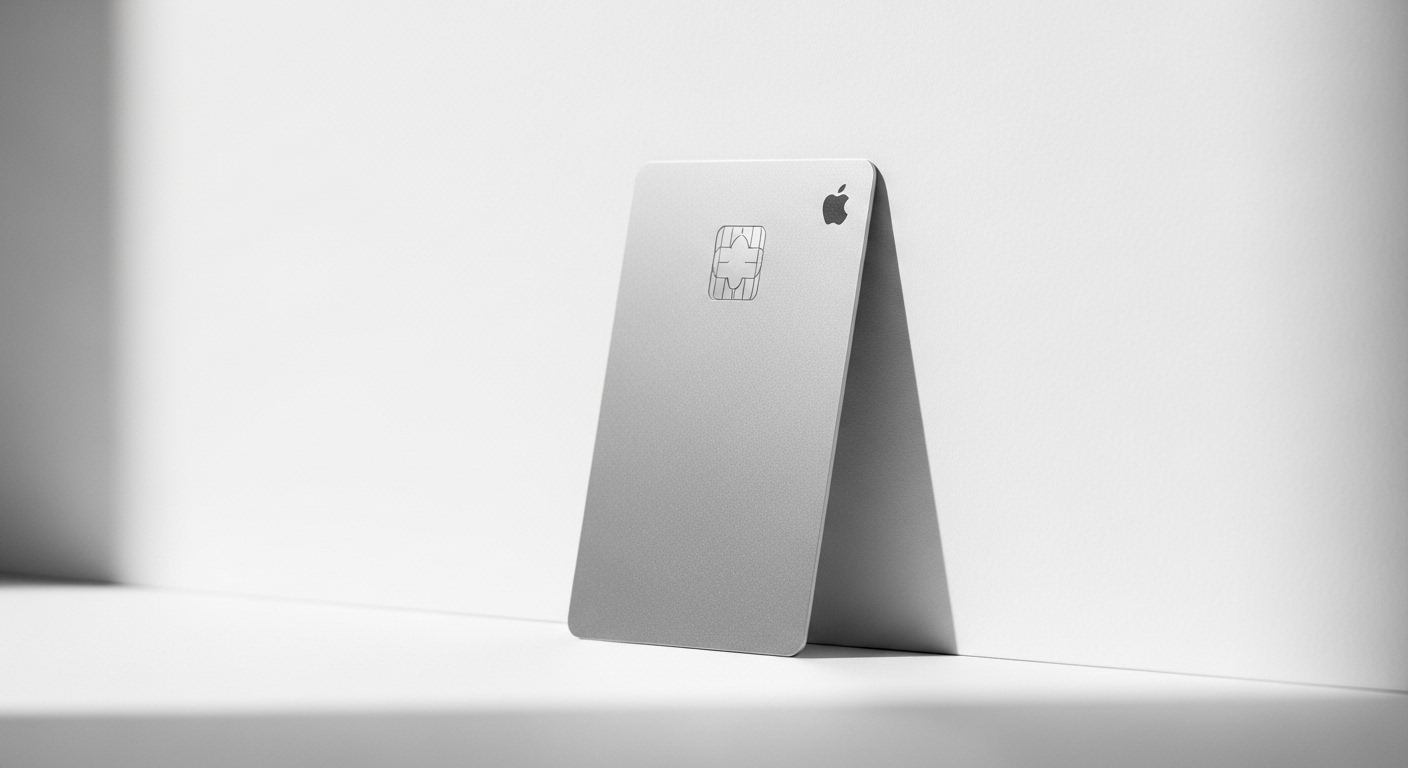
The Apple Card launched in 2019 with a level of hype that few credit cards in US history have matched. Titanium physical card. Built-in privacy features. No fees of any kind. Daily Cash that posts within minutes.
Five years later, the question isn’t whether the Apple Card is beautifully designed — it clearly is. The question is whether it’s the right card for your wallet in 2026 — and the honest answer depends almost entirely on one thing: how often you actually use Apple Pay.
This review breaks down the Apple Card’s cashback structure, credit limits, approval requirements, benefits, and where it genuinely competes — and where it falls short of alternatives available today.
Editorial note: CreditPilotUSA.com evaluates credit cards based on annual rewards value, fee structure, and approval requirements. Cards are selected independently — we are not paid to feature specific products.
Last updated: March 2026
Quick Answer
The Apple Card earns 3% Daily Cash at Apple and select partners, 2% via Apple Pay, and 1% when you enter the card number manually. It has no annual fee, no late fees, and no foreign transaction fees. It’s a strong card for iPhone users who habitually use Apple Pay — but its 1% fallback rate on non-Apple Pay transactions makes it a weak choice as a standalone card for general spending. Most cardholders get maximum value by using it alongside a flat-rate card for non-Apple Pay purchases.
Apple Card — At a Glance
| Detail | Value |
|---|---|
| Annual Fee | $0 |
| Late Fee | $0 |
| Foreign Transaction Fee | $0 |
| Over-Limit Fee | $0 |
| Apple Pay purchases | 2% Daily Cash |
| Apple / App Store / Apple Services | 3% Daily Cash |
| Apple Pay at select partners | 3% Daily Cash |
| Physical card (non-Apple Pay) | 1% Daily Cash |
| Welcome Bonus | None |
| APR | 19.99%–29.99% variable |
| Credit Limit | $250–$25,000+ (Goldman Sachs underwriting) |
| Issuer | Goldman Sachs Bank USA |
| Network | Mastercard |
| Requires | iPhone |
Apple Card Cashback: How Daily Cash Actually Works
The Apple Card’s rewards system is called Daily Cash — and it’s genuinely different from every other cashback card on the market in one important way: rewards post to your Apple Cash account within minutes of each purchase, not at the end of a billing cycle.
There’s no minimum redemption threshold. No waiting 30 days to see your rewards. No points that need to be converted. You spend $50 at a restaurant via Apple Pay, and $1 appears in your Apple Cash account before you’ve put your phone back in your pocket.
The three-tier cashback structure:
3% Daily Cash applies to:
- All purchases at Apple (Apple.com, App Store, Apple Music, iCloud+, Apple TV+, Apple Arcade)
- Walgreens and Duane Reade
- Nike stores
- Panera Bread
- T-Mobile
- Exxon and Mobil
- Ace Hardware
- Select other Apple Pay partners (updated periodically)
2% Daily Cash applies to:
- Every purchase made via Apple Pay — at any merchant that accepts it, in-store or online
1% Daily Cash applies to:
- Purchases where the physical titanium card is used
- Online purchases where you type in the card number instead of using Apple Pay
The critical distinction: The difference between 2% and 1% isn’t about the merchant — it’s about how you pay. The exact same purchase at the exact same store earns double the cashback if you tap your iPhone instead of swiping the physical card. This makes the Apple Card unique in the US market: your payment method is more important than where you shop.
The CreditPilot Apple Pay Audit
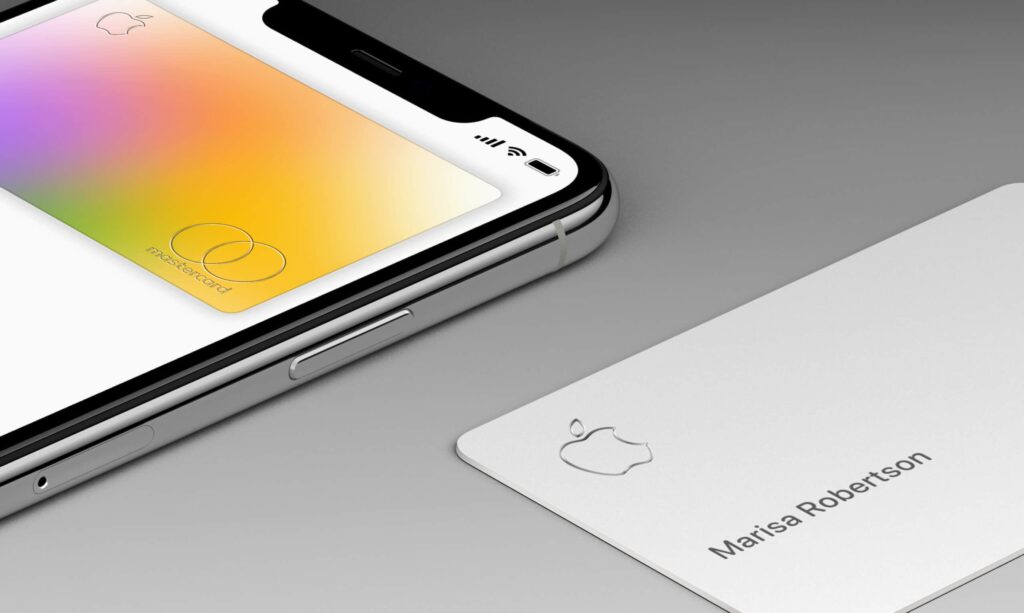
Before applying for the Apple Card, run this 60-second audit on your actual spending behavior:
Pull up your last 3 months of credit card statements. For every purchase, ask: could I have paid this with Apple Pay?
- In-store at a major retailer (Target, Walmart, Grocery stores, Starbucks) → almost always yes
- Online at a website with “Pay with Apple Pay” button → yes, if you’re on iPhone/Mac
- Online by typing your card number → no — earns only 1%
- Small merchants, older POS systems, restaurants with fixed terminals → often no
If 70%+ of your monthly spending could realistically be made via Apple Pay, the 2% rate is consistently accessible and the Apple Card competes well against flat-rate alternatives. If you’re under 50%, the 1% fallback rate on the remaining spend pulls your effective average rate below competing flat-rate cards.
For the full head-to-head comparison with the Capital One Quicksilver (the most common Apple Card alternative), see our Apple Card vs Capital One Quicksilver guide.
Apple Card Credit Limit: What to Expect
The Apple Card is issued by Goldman Sachs Bank USA and underwritten using Mastercard’s network. Credit limits are determined by Goldman Sachs’s proprietary underwriting model — which evaluates income, existing debt, credit history, and other factors.
Typical credit limit ranges by credit profile:
| Credit Score | Typical Starting Limit |
|---|---|
| 750+ | $5,000–$25,000+ |
| 700–749 | $2,500–$7,500 |
| 670–699 | $1,000–$3,500 |
| 630–669 | $250–$1,500 |
| Below 630 | Likely declined |
Important nuances:
Starting limits have been reported as low as $250 for borderline approvals — which is functional for credit-building but limits daily usability. Cardholders consistently report that requesting credit limit increases through the Wallet app (Settings → Request Credit Limit Increase) works well after 6–12 months of on-time payments, with many reporting increases from $1,000 to $3,000–$5,000 after a year of responsible use.
Goldman Sachs uses a soft pull for the initial application check before presenting an offer — meaning you can see your potential credit limit and APR without a hard inquiry before deciding to formally apply. The hard inquiry only happens when you accept the offer. This is one of the most borrower-friendly application processes of any major card issuer.
Apple Card Benefits: The Full List
Beyond Daily Cash, the Apple Card includes a set of benefits that Apple underplays in its marketing:
Zero fee structure — genuinely zero: No annual fee, no late fee, no over-limit fee, no foreign transaction fee, no cash advance fee (though interest applies). In a market where many cards charge $39 late fees, $95 annual fees, and 3% foreign transaction surcharges, the Apple Card’s complete fee elimination is a meaningful financial benefit — particularly for cardholders who occasionally pay late or travel internationally.
Interest transparency: The Apple Card’s payment interface shows you exactly how much interest you’ll pay at different payment amounts in real time — before you make the payment. Slide the payment slider up, and the projected interest charge updates instantly. This is the most transparent interest disclosure of any major US credit card — and it’s designed to actively discourage carrying a balance.
Privacy and security: The physical titanium card has no card number, no CVV, and no expiration date printed on it. Every Apple Pay transaction uses a device-specific account number — your actual card number is never shared with the merchant. For online shopping and Apple Pay transactions, this is one of the strongest fraud protection models available on any US consumer card.
Installment financing — Apple Card Monthly Installments: Apple hardware purchases (iPhone, Mac, iPad, Apple Watch, AirPods) can be paid in 0% APR installments over 6–24 months when using the Apple Card. For a $1,200 iPhone purchase, this means 24 monthly payments of $50 with no interest — saving $100–$200 compared to carrying the balance at the standard APR. This benefit alone can outweigh the card’s cashback calculation for regular Apple hardware buyers.
Wallet app integration: Every transaction is automatically categorized, mapped to a merchant location, and displayed in a color-coded spending summary in the iPhone Wallet app. No third-party budgeting app needed for Apple Card spending — the native analytics are the most polished of any card issuer in the US market.
Apple Card Pros and Cons
Pros:
✅ Genuinely zero fees — no annual, late, foreign transaction, or over-limit fees ✅ 2% on all Apple Pay purchases — consistently competitive flat rate ✅ 3% at Apple and growing list of partner merchants ✅ Daily Cash posts within minutes — no waiting for billing cycle ✅ Soft pull to see offer before hard inquiry ✅ 0% APR installments on Apple hardware ✅ Best-in-class privacy — device number, no physical card data ✅ Real-time interest transparency in payment slider ✅ Clean, category-tagged spending analytics in Wallet app ✅ Titanium card is genuinely premium — if aesthetics matter to you
Cons:
❌ 1% on non-Apple Pay transactions — weakest fallback rate of any major flat-rate card ❌ No welcome bonus — $200 signup bonuses standard on competing no-fee cards ❌ Requires iPhone — Android users cannot apply or manage the account ❌ Goldman Sachs servicing — customer service has received mixed reviews ❌ Apple Cash required for Daily Cash redemption — adds friction for non-Apple Pay users ❌ No transfer partners, no travel rewards, no points ecosystem ❌ Not ideal for cardholders who shop at merchants with poor Apple Pay acceptance
Who Should Get the Apple Card
Strong fit:
- iPhone users who use Apple Pay in-store and online for 60%+ of purchases
- Apple product buyers who finance hardware on 0% APR Monthly Installments
- People who want genuinely zero fees with no exceptions
- Travelers who want no foreign transaction fees with a clean spending tracker
- Anyone who values financial privacy and security features
Poor fit:
- Android users — not available
- Cardholders who primarily swipe a physical card or enter numbers online
- Rewards maximizers who want a welcome bonus (Apple Card offers none)
- Travel card seekers — no points, no miles, no lounge access, no travel credits
- Cardholders who want a single card for all spending (1% fallback is too low)
Apple Card vs. The Competition
| Card | Annual Fee | Best Rate | Applies To | Welcome Bonus |
|---|---|---|---|---|
| Apple Card | $0 | 3% / 2% | Apple + Apple Pay | None |
| Chase Freedom Unlimited® | $0 | 3% | Dining + drugstores | $200 |
| Citi® Double Cash | $0 | 2% | Everything | $200 |
| Capital One Quicksilver | $0 | 1.5% | Everything | $200 |
| Discover it® Cash Back | $0 | 5% | Rotating categories | Match Year 1 |
The Apple Card’s 2% on Apple Pay is competitive — but it’s conditional. The Citi Double Cash earns 2% unconditionally on every purchase regardless of payment method, with a $200 welcome bonus the Apple Card doesn’t offer.
For a complete breakdown of no-annual-fee cards including the Apple Card’s position in the field, see our best no annual fee credit cards guide. For cashback-specific comparisons, see our best cashback credit cards USA guide.
The Two-Card Strategy: How to Maximize the Apple Card
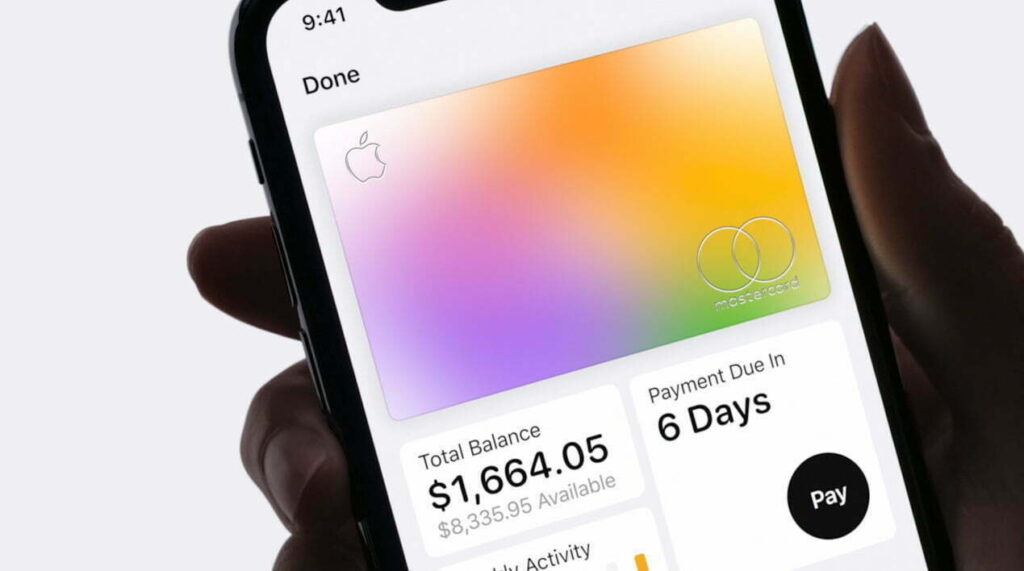
The Apple Card delivers maximum value when paired with a second card that covers its weakness — the 1% fallback rate on non-Apple Pay transactions.
Recommended pairing:
Apple Card → Use for all Apple Pay purchases (2%) and Apple / partner purchases (3%) Citi Double Cash or Chase Freedom Unlimited → Use for all non-Apple Pay transactions (2% or 1.5–3%)
Annual value at $2,000/month total spending (60% Apple Pay, 40% physical/online):
| Spending | Card Used | Rate | Annual Cashback |
|---|---|---|---|
| $1,200/month Apple Pay | Apple Card | 2% | $288 |
| $800/month other | Citi Double Cash | 2% | $192 |
| Total | $480/year |
Versus using the Apple Card alone for all $2,000/month:
- $1,200 at 2% = $288
- $800 at 1% = $96
- Total: $384/year
The two-card combination generates $96 more per year from the same spending — and neither card has an annual fee.
For the full comparison between Apple Card and Quicksilver as a pairing decision, see our Apple Card vs Capital One Quicksilver guide.
Apple Card Approval Requirements
- Credit score: Generally 670+ for approval; 700+ for competitive limits; below 630 typically declined
- Requires: iPhone running a recent iOS version
- Residency: US residents only — must have a US address
- Age: 18+ (or 13+ as part of Apple Card Family with a parent/guardian)
- Application: Entirely through the iPhone Wallet app — no web application available
Apple Card Family: Apple allows up to 5 family members (ages 13+) to share the Apple Card account. Members under 18 have optional spending limits set by the account owner. All members earn 2% Daily Cash on Apple Pay purchases. This makes the Apple Card one of the few products that gives teenagers a supervised, fee-free credit-building tool.
Frequently Asked Questions
Is the Apple Card worth it?
The Apple Card is worth it for iPhone users who regularly use Apple Pay — particularly for Apple purchases (3%), partner merchants (3%), and any merchant accepting Apple Pay (2%). For cardholders who frequently swipe a physical card or enter numbers online, the 1% fallback rate makes it a weak standalone card. Most cardholders get the best value using it alongside a 2% flat-rate card for non-Apple Pay spending.
What is the Apple Card credit limit?
Apple Card credit limits range from $250 to $25,000+, determined by Goldman Sachs’s underwriting based on income, credit history, and existing debt. Most applicants with scores above 700 receive limits between $2,500 and $7,500 to start. Limits can be increased through the Wallet app after 6–12 months of responsible use. Goldman Sachs offers a soft pull preview so you can see your potential limit before the formal hard inquiry.
Does the Apple Card build credit?
Yes. The Apple Card reports to TransUnion and Equifax monthly — payment history, balance, and credit limit are all reported. Responsible use (on-time payments, low utilization) builds credit history on both bureaus. Note: Apple Card currently only reports to two of the three major bureaus (not Experian), which builds credit slightly slower than cards reporting to all three.
What is Daily Cash and how do you redeem it?
Daily Cash is Apple’s cashback program — rewards post to your Apple Cash account within minutes of each transaction. You can use Apple Cash to make purchases via Apple Pay, send money to contacts via Messages, transfer to a linked bank account, or apply it toward your Apple Card balance. There’s no minimum redemption amount and no expiration date on Daily Cash balances.
Can I use the Apple Card internationally?
Yes — the Apple Card has no foreign transaction fees and is accepted anywhere Mastercard is accepted worldwide. Apple Pay is widely accepted internationally in major markets. The physical card functions as a standard Mastercard abroad. Daily Cash (2% on Apple Pay transactions) applies to international purchases in the same way as domestic ones.
Final Verdict
The Apple Card is a genuinely well-designed product — and a genuinely conditional one.
For iPhone users who pay with Apple Pay habitually, shop at Apple regularly, and value the zero-fee structure, daily reward posting, and privacy features, it earns its place in the wallet. The 0% APR Apple hardware financing alone can justify keeping it open indefinitely for regular Apple buyers.
For general spenders who swipe cards, type numbers online, or want a welcome bonus and broader rewards flexibility, the Apple Card’s 1% fallback rate and no-bonus structure make it the wrong primary card. The Chase Freedom Unlimited, Citi Double Cash, and Discover it all deliver more annual value for mixed spending profiles.
The honest bottom line: the Apple Card is excellent at being an Apple product. Whether that’s what you need from a credit card depends entirely on how deep you are in the Apple ecosystem — and how often you actually tap to pay.
For more credit card reviews and comparisons built for US consumers, visit CreditPilotUSA.com — your trusted co-pilot for navigating the world of credit.
Disclaimer: Card terms, Daily Cash rates, partner merchant lists, APRs, and credit limit ranges are subject to change. Apple Card is issued by Goldman Sachs Bank USA. Always verify current terms directly with Apple and Goldman Sachs before applying. This article is for educational purposes only and does not constitute financial advice.

Danilo is a Credit Analyst and the Founder of CreditPilotUSA.com. With deep expertise in the credit card industry, he translates complex banking news and reward systems into actionable financial strategies. Dedicated to helping Americans master their credit scores and maximize the cards in their wallets.