Editorial Note: CreditPilotUSA.com provides independent financial education for U.S. consumers. This article is for informational purposes only and does not constitute financial, legal, or tax advice. Credit card terms, APRs, rewards, fees, and welcome offers can change, so always verify details directly with the issuer before applying.
Affiliate Disclosure: Some links on this page may be affiliate links. If you apply through them, CreditPilotUSA.com may earn a commission at no extra cost to you. Our recommendations are based on card features, consumer fit, and editorial research — not compensation alone.
Quick Answer
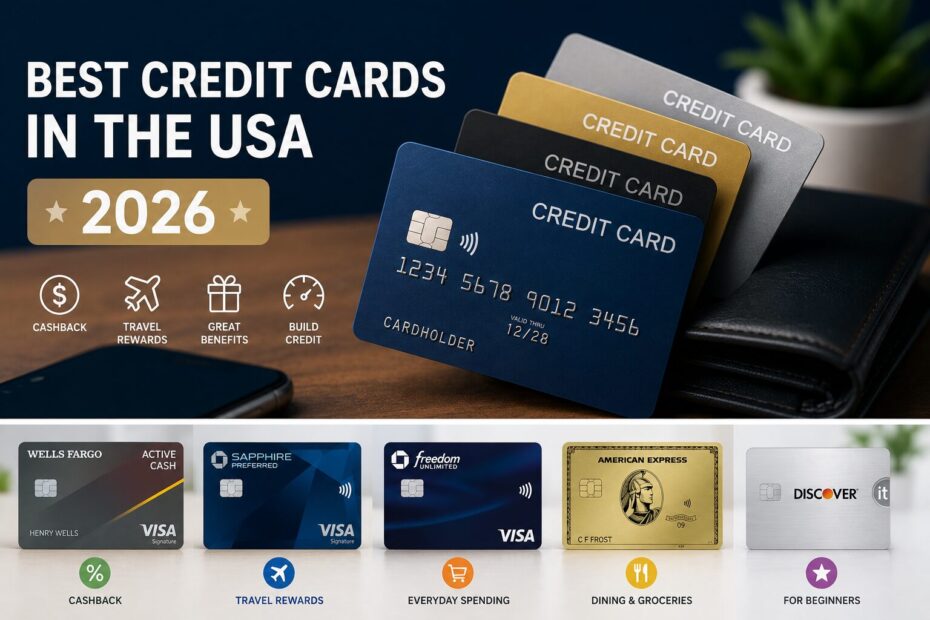
The best credit cards in the USA for 2026 depend on how you spend. For simple cashback, a flat-rate card like Wells Fargo Active Cash® is hard to beat. For travel, Chase Sapphire Preferred® remains one of the strongest mid-tier options. Beginners may prefer Discover it® Cash Back, while people paying down debt should compare balance transfer cards before focusing on rewards.
Why Choosing the Right Credit Card Matters
The “best” credit card is not always the card with the biggest bonus or the flashiest perks.
It is the card that fits your real spending habits, credit score, and financial goals.
A strong credit card can help you:
- Earn cashback on everyday purchases
- Collect travel points or miles
- Build or rebuild credit
- Access purchase protection and fraud protection
- Manage large expenses with intro APR offers
- Improve your credit profile through responsible use
But the wrong card can cost you money through annual fees, interest charges, late fees, or rewards you never use.
If you are still building your credit, read our guide on how to fix your credit score before applying for premium rewards cards.
Best Credit Cards in the USA for 2026

Here are the top picks by category.
| Category | Best Card | Best For |
|---|---|---|
| Flat-rate cashback | Wells Fargo Active Cash® Card | Simple 2% cash rewards |
| Travel rewards | Chase Sapphire Preferred® Card | Flexible travel points |
| Everyday spending | Chase Freedom Unlimited® | Dining, drugstores, and general purchases |
| Dining and groceries | American Express® Gold Card | Food-focused spenders |
| Beginners | Discover it® Cash Back | First-year cashback match |
| Balance transfers | Citi Double Cash® Card | Debt payoff plus long-term cashback |
| Premium travel | Capital One Venture X Rewards | Lounge access and travel perks |
Best for Flat-Rate Cashback: Wells Fargo Active Cash® Card
The Wells Fargo Active Cash® Card is one of the simplest cashback cards in the U.S.
Best for: People who want easy rewards
Annual fee: $0
Main benefit: Unlimited 2% cash rewards on purchases
Potential downside: Fewer premium travel perks
Why it stands out:
You do not need to track bonus categories, transfer partners, or quarterly activations. If you want one card for most purchases, a flat 2% structure is easy to understand and easy to use.
This card works well for everyday expenses like groceries, gas, subscriptions, utilities, and online shopping.
Learn more from the official Wells Fargo Active Cash page.
Best for Travel Rewards: Chase Sapphire Preferred® Card
The Chase Sapphire Preferred® Card remains one of the best travel credit cards for people who want flexible rewards without jumping into a premium annual fee.
Best for: Travelers who want transferable points
Annual fee: $95
Main benefit: Flexible Chase Ultimate Rewards points
Potential downside: Not ideal if you rarely travel
Why it stands out:
Chase Ultimate Rewards points can be redeemed through Chase Travel or transferred to select airline and hotel partners. That flexibility makes the Sapphire Preferred especially useful for people who want more value than basic cashback.
It also pairs well with no-annual-fee Chase cards like Chase Freedom Unlimited® and Chase Freedom Flex℠.
For a deeper strategy, read our guide on how to maximize Chase Ultimate Rewards.
Official card details: Chase Sapphire Preferred.
Best for Everyday Spending: Chase Freedom Unlimited®
Chase Freedom Unlimited® is a strong everyday card because it combines simple rewards with useful bonus categories.
Best for: Daily purchases
Annual fee: $0
Main benefit: Solid rewards on travel through Chase, dining, drugstores, and general spending
Potential downside: Best value comes when paired with a Sapphire card
Why it stands out:
This card can work as a beginner cashback card or as part of a more advanced Chase rewards setup. Used alone, it is simple. Paired with a Sapphire card, it becomes more powerful because rewards can potentially be combined for travel redemptions.
If you want help choosing your next card, use the Credit Card Comparison Tool.
Best for Dining and Groceries: American Express® Gold Card
The American Express® Gold Card is built for people who spend heavily on food.
Best for: Restaurants, takeout, delivery, and U.S. supermarkets
Annual fee: Check current Amex terms
Main benefit: Strong Membership Rewards earning on food-related purchases
Potential downside: The annual fee only makes sense if you use the benefits
Why it stands out:
For food-focused households, the Amex Gold can generate meaningful rewards. It is especially attractive for people who dine out often, order delivery, or spend heavily at U.S. supermarkets.
However, it is not the best fit for someone who wants a no-fee card or prefers simple cashback.
Always compare current benefits and credits on the official American Express Gold Card page.
Best for Beginners: Discover it® Cash Back
The Discover it® Cash Back is one of the most beginner-friendly rewards cards in the U.S.
Best for: New cardholders and people building credit
Annual fee: $0
Main benefit: Rotating 5% cashback categories and first-year Cashback Match
Potential downside: Requires category activation
Why it stands out:
Discover automatically matches all the cash back new cardmembers earn at the end of the first year. That makes the first year especially valuable for responsible users.
This card is best for people who are willing to activate rotating categories and pay their balance in full.
Official details: Discover it Cash Back.
If you have limited or damaged credit, also compare secured credit cards.
Best for Balance Transfers: Citi Double Cash® Card
The Citi Double Cash® Card is useful because it combines long-term cashback with balance transfer potential.
Best for: Paying down debt and earning simple rewards later
Annual fee: $0
Main benefit: Earns 2% cash back: 1% when you buy and 1% as you pay
Potential downside: Balance transfer terms and fees can change
Why it stands out:
If you are carrying credit card debt, a balance transfer card may help reduce interest while you pay down the balance. Once the debt is gone, Citi Double Cash can continue to work as a simple everyday cashback card.
Official details: Citi Double Cash.
Important: Do not focus on rewards while carrying high-interest debt. Paying off the balance should come first.
Best for Premium Travel: Capital One Venture X Rewards
The Capital One Venture X Rewards card is designed for travelers who want premium benefits without the highest premium-card fee in the market.
Best for: Frequent travelers
Annual fee: $395
Main benefit: Travel credits, lounge access, and strong miles earning
Potential downside: Best for people who actually use travel benefits
Why it stands out:
Venture X can be valuable if you use Capital One Travel, airport lounge access, and the card’s travel perks. If you only travel once a year, a simpler travel card may be better.
Official details: Capital One Venture X.
How to Choose the Best Credit Card for You
Before applying, ask five questions:
- Do I want cashback or travel rewards?
- Do I pay my balance in full every month?
- Which categories do I spend the most on?
- Am I willing to pay an annual fee?
- Is my credit score strong enough for this card?
If you carry a balance, prioritize a lower APR or balance transfer offer over rewards. Rewards are not worth it if interest charges erase the value.
If you are unsure where you stand, review FICO Score vs VantageScore to understand which credit score may matter when applying.
Common Credit Card Mistakes to Avoid
Avoid these mistakes:
- Applying for too many cards at once
- Carrying a balance just to earn rewards
- Ignoring annual fees
- Missing payments
- Using too much of your available credit
- Chasing welcome bonuses you cannot afford
- Forgetting to activate rotating categories
- Not checking issuer terms before applying
The best credit card strategy is simple: earn rewards only on purchases you already planned to make, then pay the statement balance in full.
FAQ
What is the best credit card in the USA for 2026?
The best credit card in the USA for 2026 depends on your goals. Wells Fargo Active Cash is strong for simple cashback, Chase Sapphire Preferred is excellent for travel rewards, Discover it Cash Back is useful for beginners, and Citi Double Cash is practical for balance transfers and everyday cashback.
What credit score do I need for the best credit cards?
Many top rewards cards require good to excellent credit, often around 670 or higher. Premium travel cards may require stronger profiles. Approval also depends on income, debt, credit history, recent applications, and issuer rules.
Is cashback better than travel rewards?
Cashback is better if you want simplicity and guaranteed value. Travel rewards can be better if you travel often and know how to redeem points strategically. Most beginners should start with cashback before moving into complex travel rewards.
How many credit cards should I have?
Many people do well with two or three cards: one flat-rate cashback card, one category rewards card, and possibly one travel card. More cards can help only if you manage payments, balances, and annual fees responsibly.
Should I pay an annual fee for a credit card?
Only pay an annual fee if the rewards, credits, and benefits are worth more than the cost. If you do not use the perks, a no-annual-fee card is usually the smarter choice.
Final Verdict
The best credit cards in the USA for 2026 are not the same for everyone.
If you want simple cashback, start with a flat-rate card like Wells Fargo Active Cash. If you travel, Chase Sapphire Preferred or Capital One Venture X may offer more long-term value. If you are new to credit, Discover it Cash Back or a secured card may be the better first step. If you have credit card debt, focus on a balance transfer card before chasing rewards.
Choose the card that fits your spending, pay on time, keep balances low, and avoid interest whenever possible.
That is how credit cards become a financial tool — not a financial trap.

Danilo is a Credit Analyst and the Founder of CreditPilotUSA.com. With deep expertise in the credit card industry, he translates complex banking news and reward systems into actionable financial strategies. Dedicated to helping Americans master their credit scores and maximize the cards in their wallets.