


You just hit ‘submit’ on your credit card application — now the waiting game begins. But how long does it take to get approved for a credit card in 2026?
While many issuers provide an instant decision in 60 seconds, others may put your application under a manual ‘7-10 day’ review. Whether you are building credit for the first time or adding a premium travel card to your wallet, understanding the approval timeline is the only way to avoid unnecessary anxiety and know exactly when to call the reconsideration line.
In this guide, we break down the exact processing times for major US banks, why some applications stall, and what to do if your decision takes longer than expected.
How long does a credit card approval usually take?
Most online applications result in an instant decision (60 seconds or less). However, if your application requires manual underwriting, the typical wait time is 7 to 10 business days.
Last updated: March 2026
Quick Answer
Most credit card applications in the USA receive an instant decision within 60 seconds of submission — either an approval, a denial, or a request for further review. If your application goes to manual review, a decision typically arrives within 7 to 10 business days by mail or email. In rare cases involving identity verification, the process can take up to 30 days.
What Is the Credit Card Approval Process?
When you submit a credit card application — online, by phone, or by mail — the issuer immediately begins an automated review process. This process happens in the background within seconds and involves several simultaneous checks.
Step 1: Identity verification The issuer confirms your name, Social Security Number, date of birth, and address against government and credit bureau records. Any mismatch can trigger a manual review or outright denial.
Step 2: Hard credit inquiry The issuer pulls your credit report from one or more of the three major bureaus — Equifax, Experian, or TransUnion. This is a hard inquiry that temporarily reduces your credit score by 5 to 10 points. The issuer uses this report to evaluate your credit score, payment history, current balances, and existing accounts.
Step 3: Income and debt verification The issuer compares your stated income against your existing debt obligations to calculate your debt-to-income ratio. This determines whether you can realistically afford the credit line being requested.
Step 4: Internal scoring Beyond your FICO score, most major issuers run your data through their own proprietary scoring models — which may consider factors like your banking relationship with them, how many cards you’ve recently opened, or whether you’ve previously held an account with that issuer.
Step 5: Decision Based on all of the above, the system issues an instant decision — approved, denied, or pending further review.
Why Credit Card Approval Time Matters in the United States
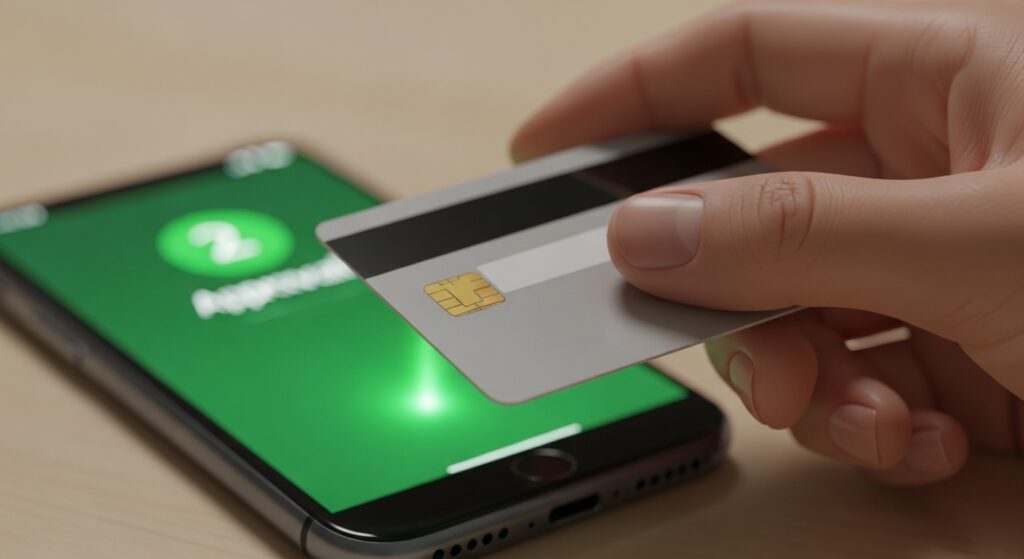
The timeline matters for several practical reasons that affect real financial decisions.
Planned purchases. If you’re applying for a card specifically to use for a large purchase — a home appliance, a vacation booking, a holiday shopping run — knowing whether you’ll receive the card in time affects your planning. An instant approval doesn’t mean you have a physical card in hand. Most physical cards arrive 7 to 10 business days after approval. Some issuers provide a virtual card number immediately upon approval for online purchases.
Welcome bonus timing. Most credit card welcome bonuses require meeting a spending threshold within the first 3 months of account opening. Your 90-day clock starts from the approval date — not the date your physical card arrives. If you’re planning a large purchase to meet the bonus threshold, account for shipping time before the purchase date.
Credit score timing. Applying for multiple cards in a short period creates multiple hard inquiries that compound score damage. Knowing how long each application decision takes helps you space applications appropriately — most advisors recommend waiting at least 6 months between credit card applications.
For a full picture of how your credit score affects approval odds and what each score range unlocks, see our credit score ranges explained guide.
How the Credit Card Approval Timeline Works
Instant Approval — Seconds to 60 Seconds
The majority of online credit card applications in the US receive an instant decision. Issuers like Chase, American Express, Capital One, Discover, and Citi have automated systems capable of evaluating an application and returning a decision in under 60 seconds.
Instant approval is most likely when:
- Your credit score clearly exceeds the card’s minimum requirement
- Your income is verifiable and comfortably above the issuer’s threshold
- You have no recent derogatory events (missed payments, collections, bankruptcies)
- Your information matches bureau records exactly — no discrepancies in name, address, or SSN
- You haven’t opened multiple new accounts in the past 12 months
When you receive an instant approval online, you’ll typically see the decision immediately on screen, followed by a confirmation email with your credit limit and account details.
Pending Review — 7 to 10 Business Days
If the automated system cannot reach a clear decision, your application goes to manual review by a human underwriter. This is more common than most applicants expect — and it does not mean you’ve been denied.
Common reasons for pending review:
- Your credit score is near the card’s approval threshold — not clearly above or below
- You recently moved and your address doesn’t match bureau records yet
- Your income is unusually high or low relative to your credit profile
- You’ve opened several new accounts in the past 6 to 12 months
- The issuer’s fraud detection system flagged something in your application for verification
During a pending review, you may receive a letter or email asking for additional documentation — pay stubs, tax returns, or proof of address. Responding quickly and completely is the single most important action you can take to accelerate the process.
Most pending decisions resolve within 7 to 10 business days. If you haven’t heard back after 10 business days, call the issuer’s reconsideration line directly.
Extended Review — Up to 30 Days
In rare cases — typically involving identity verification issues, fraud flags, or complex credit profiles — the review process can extend to 30 days. Issuers are legally required to notify you of a decision or request for information within 30 days of receiving your application under the Equal Credit Opportunity Act (ECOA).
If 30 days pass without a decision, contact the issuer directly.
How Long Until You Can Actually Use the Card?
Approval and usability are two different timelines.
| Scenario | When You Can Use It |
|---|---|
| Instant approval — virtual card | Immediately (some issuers) |
| Instant approval — online purchases | Same day (with virtual card number) |
| Physical card — standard delivery | 7–10 business days after approval |
| Physical card — expedited delivery | 2–3 business days (some issuers) |
| Pending review — physical card | 7–10 business days after approval decision |
Issuers that provide immediate virtual card numbers upon approval:
- American Express — virtual card number available in the Amex app within minutes
- Apple Card — available in the Wallet app immediately upon approval
- Discover — virtual account number available upon approval for online use
- Capital One — virtual card available through the Capital One app
If you need to use the card immediately for an online purchase, apply with an issuer that provides instant virtual card access.
Best Tips to Get Approved Faster
1. Check Your Credit Score Before Applying
Applying for a card you don’t qualify for creates a hard inquiry that costs 5 to 10 points — and you still don’t get the card. Check your FICO Score 8 for free through the Experian app before any application, and confirm you meet the card’s minimum credit requirement.
2. Use Pre-Qualification Tools
Most major issuers offer pre-qualification checks that use a soft inquiry — no score impact. Capital One, American Express, Discover, and Chase all have pre-qualification pages where you can check your odds before submitting a formal application. A pre-qualification offer is not a guaranteed approval, but it significantly improves your odds.
3. Make Sure Your Information Matches Your Credit Report
The single most common cause of manual review is an information mismatch. Your name, address, date of birth, and SSN on the application must match what’s on file at the credit bureaus exactly. If you’ve recently moved, update your address with the bureaus before applying.
4. Apply Online, Not by Mail
Online applications are processed instantly. Mailed paper applications can take 4 to 6 weeks just for the issuer to receive and enter them — adding significant time before any decision is made. Always apply online for the fastest decision.
5. Call the Reconsideration Line If Denied
A denial is not always final. Every major US card issuer has a reconsideration line where you can speak with an underwriter and explain your application. If you were denied due to a recent address change, a credit inquiry you can explain, or a factor you can address verbally, reconsideration calls succeed more often than most applicants expect.
Common Mistakes to Avoid
Applying for multiple cards at once. Each application generates a hard inquiry. Three applications in one week creates three inquiries simultaneously — compounding the score impact and signaling financial stress to issuers who can see the inquiry pattern. Space applications at least 6 months apart.
Applying for cards above your credit tier. Applying for a Chase Sapphire Reserve with a 640 credit score results in a denial and a hard inquiry you can’t undo. Know your tier and apply accordingly. See our how to get approved for your first credit card guide for tier-appropriate options at every score level.
Not responding to additional information requests. If the issuer sends a letter requesting documentation and you don’t respond, the application expires. Respond within 30 days — ideally within 48 hours.
Closing old cards before applying. Closing an existing credit card reduces your available credit and raises your utilization ratio — which can lower your score right before the application hard inquiry. Never close a card in the weeks before applying for a new one.
Forgetting about the 5/24 rule at Chase. Chase automatically denies applications from cardholders who have opened 5 or more new credit card accounts in the past 24 months — regardless of credit score. This is a published policy and applies to most Chase products. If you’ve been actively building a card portfolio, count your recent openings before applying for any Chase product.
Expert Tips to Get Better Results
Time your application strategically. Apply when your credit utilization is at its lowest — ideally right after a statement closes with a low balance. Utilization accounts for 30% of your FICO score, and a low reported balance before the application hard inquiry can improve your score by 20 to 40 points compared to applying mid-cycle at high utilization.
Build a relationship with the issuer first. Capital One, Discover, and American Express all offer easier-to-approve entry-level products. Getting approved for a basic card with an issuer, demonstrating responsible use for 6 to 12 months, and then applying for a premium product with the same issuer dramatically improves approval odds compared to applying cold.
Request a credit limit increase before applying elsewhere. A higher limit on an existing card lowers your overall utilization ratio — which improves your score before the new application inquiry. Request increases on existing cards 60 to 90 days before applying for a new card.
Monitor your credit report for errors first. One in five American credit reports contains an error significant enough to affect the score. An inaccurate late payment or incorrect balance can cause a denial that shouldn’t have happened. Pull your full report from all three bureaus at AnnualCreditReport.com and dispute any errors at least 60 days before a major credit application.
For more strategies to build your score before applying, see our how to fix your credit score guide.
Frequently Asked Questions
How long does credit card approval take?
Most online credit card applications receive an instant decision within 60 seconds. If additional review is needed, the issuer typically responds within 7 to 10 business days. In cases involving identity verification, the process can take up to 30 days. Under the Equal Credit Opportunity Act, issuers must notify you of a decision within 30 days of receiving your application.
What does “pending” mean on a credit card application?
A pending status means your application was not approved or denied automatically — it’s been flagged for manual review by an underwriter. This does not mean you’ve been denied. It typically means your application sits near the approval threshold, contains information that needs verification, or triggered a fraud detection flag. Most pending applications resolve within 7 to 10 business days.
Can I use a credit card immediately after approval?
Some issuers — including American Express, Apple Card, Discover, and Capital One — provide a virtual card number immediately upon approval that can be used for online purchases. Physical cards arrive 7 to 10 business days after approval. If immediate use is a priority, choose an issuer that offers instant virtual card access.
Does applying for a credit card hurt your credit score?
Yes — each credit card application triggers a hard inquiry that temporarily reduces your FICO score by approximately 5 to 10 points. The impact fades over 12 months and the inquiry disappears from your score calculation entirely after that, though it remains visible on your report for 2 years. Spacing applications at least 6 months apart minimizes the cumulative impact.
What credit score do I need to get approved for a credit card?
Credit score requirements vary significantly by card. Secured cards and credit-builder products accept applicants with no credit history or scores as low as 500. Mainstream no-annual-fee rewards cards generally require 670 or above. Premium travel cards like the Chase Sapphire Preferred and Amex Gold typically require 700 or above. Ultra-premium products like the Amex Platinum usually require 720 to 740 or higher.
Final Thoughts
Getting approved for a credit card in the United States is a predictable process once you understand how it works. Most decisions happen in under 60 seconds. Most pending reviews resolve in under 10 business days. And most denials — when they happen — are avoidable with the right preparation.
The key variables are your credit score, your utilization at the time of application, your recent inquiry history, and whether your application information matches your credit bureau records exactly. Address each of these before you apply and you dramatically improve both your approval odds and the speed of the decision.
For more guides on credit cards, credit score strategy, and personal finance built for US consumers, visit CreditPilotUSA.com — your trusted co-pilot for navigating the world of credit.
Disclaimer: Credit card approval processes and timelines vary by issuer and are subject to change. Information provided is for educational purposes only and does not constitute financial advice.

Danilo is a Credit Analyst and the Founder of CreditPilotUSA.com. With deep expertise in the credit card industry, he translates complex banking news and reward systems into actionable financial strategies. Dedicated to helping Americans master their credit scores and maximize the cards in their wallets.