

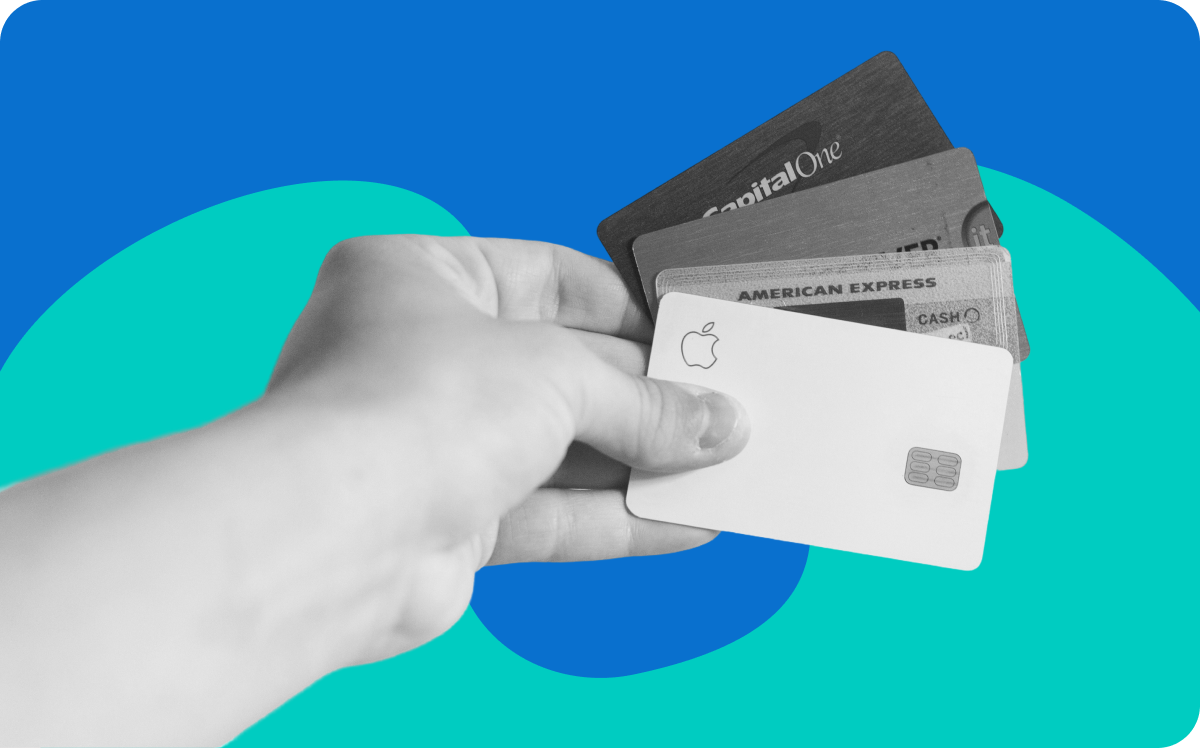
College is where you learn to manage your time, your studies, and — if you play it right — your money. One of the smartest financial moves any student can make is getting their first credit card and using it responsibly. The best student credit cards in the USA are specifically designed for this moment: no credit history required, low fees, and built-in tools to help you build a strong financial foundation before graduation.
The challenge is knowing which card is actually worth getting — and which ones are designed to profit from inexperienced borrowers. This guide cuts through the noise and gives you the top student credit card options for 2026, how they work, and exactly how to use yours to build real credit from day one.
Whether you’re a freshman opening your first account or a graduate student looking to upgrade your financial profile, you’ll find the right card — and the right strategy — right here.
Quick Answer
The best student credit cards in the USA for 2026 include the Discover it® Student Cash Back (5% rotating cashback, no annual fee), the Chase Freedom® Student Credit Card ($20 annual credit, rewards on every purchase), and the Capital One SavorOne Student Cash Rewards (3% on dining and entertainment). All three approve applicants with no credit history, report to all three bureaus monthly, and offer a clear path to graduating to a premium card after 12–18 months.
What Are Student Credit Cards?
Student credit cards are entry-level credit products designed specifically for college and university students who have little to no credit history. Unlike standard credit cards that require an established FICO score, student credit cards for no credit history use alternative approval criteria — such as proof of enrollment, income (including part-time work or financial aid), and age.
They typically feature:
- No credit history required for approval
- Low or no annual fees
- Modest credit limits (usually $500–$1,500 to start)
- Rewards programs tailored to student spending (dining, streaming, books)
- Monthly reporting to all three major credit bureaus — the engine of credit building
- Automatic upgrade paths to non-student cards after responsible use
Student cards are different from secured cards in one key way: they don’t require a security deposit. You apply, get approved based on student status and basic financial criteria, and start building credit immediately.
Why Building Credit as a Student Changes Your Financial Future
Most students don’t realize that the credit history you build between ages 18 and 22 will directly shape the financial opportunities you have at 25, 30, and beyond. Here’s why starting early is one of the highest-return decisions you can make:
Length of credit history accounts for 15% of your FICO score — and the clock starts the day you open your first account. A student who opens a credit card at 18 and keeps it open will have a 10-year-old account by 28, giving them a significant advantage over someone who starts at 25.
Your first post-graduation apartment will require a credit check. Most landlords in major US cities require a minimum score of 620–650. Students who built credit during college typically clear this bar easily; those who didn’t are often forced into higher deposits or co-signers.
Your first car loan will reflect your credit score directly in the interest rate offered. The difference between a 5% and a 15% rate on a $20,000 vehicle adds up to thousands of dollars over the life of the loan.
Premium rewards cards — including the best cashback and travel cards covered in our Best Cashback Credit Cards guide — require a score of 670 or above. Students who build responsibly during college often qualify for these cards the month after graduation.
According to the Consumer Financial Protection Bureau (CFPB), young adults who establish credit early and maintain it responsibly have significantly better access to financial products, housing, and employment opportunities throughout their lives.
How Student Credit Cards Work
The mechanics are straightforward — and understanding them helps you avoid the traps that turn a useful tool into an expensive mistake:
- Apply with proof of student status — most issuers accept enrollment verification, a student ID, or simply your college email address
- Get approved based on student criteria — income from part-time work, allowances, or financial aid all count; no prior credit history needed
- Receive your card with an initial credit limit — typically $500–$1,000 for first-time applicants
- Make small, manageable purchases — think dining hall meals, textbooks, a streaming subscription, or gas
- Pay your full statement balance every month — this is the single most important habit you can build
- The issuer reports your on-time payment to Equifax, Experian, and TransUnion each billing cycle
- Your credit score builds — most students see their first score within 3–6 months and reach 670+ within 12–18 months of consistent use
- Graduate to a better card — after 12–18 months, you’ll qualify for premium cards with higher limits and stronger rewards
Best Student Credit Cards in the USA for 2026
1. Discover it® Student Cash Back
Best overall student credit card — rewards + no annual fee
- ✅ 5% cashback in rotating quarterly categories (restaurants, Amazon, gas stations, grocery stores)
- ✅ 1% cashback on all other purchases
- ✅ Cashback Match™ — Discover doubles every dollar of cashback earned in your first year
- ✅ No annual fee
- ✅ No credit history required
- ✅ $20 statement credit each school year your GPA is 3.0 or above
- ✅ No penalty APR for your first late payment
Why it stands out: The first-year Cashback Match is one of the most generous welcome offers in the student card space. Earn $100 in cashback during year one, and Discover gives you another $100 — automatically.
2. Discover it® Student Chrome
Best for gas and dining
- ✅ 2% cashback at gas stations and restaurants (up to $1,000 in combined purchases per quarter)
- ✅ 1% on everything else
- ✅ Cashback Match™ for the first year
- ✅ No annual fee
- ✅ $20 GPA reward each school year
- ✅ No credit score required to apply
Why it stands out: Simpler than the rotating category version — if you drive regularly or eat out frequently, the 2% on those categories delivers consistent value without any activation required.
3. Chase Freedom® Student Credit Card
Best for building toward the Chase ecosystem
- ✅ 1% cashback on every purchase
- ✅ $50 bonus after first purchase within 3 months of account opening
- ✅ $20 annual credit for maintaining good standing each account anniversary
- ✅ Automatic credit limit increase consideration after 5 on-time monthly payments
- ✅ No annual fee
- ✅ Path to upgrade to Chase Freedom Unlimited® or Sapphire cards after graduation
Why it stands out: Chase’s ecosystem is one of the most valuable in the rewards world. Starting here as a student positions you to transfer to a Chase Sapphire card after graduation — unlocking some of the best travel rewards available.
4. Capital One SavorOne Student Cash Rewards Credit Card
Best for dining, entertainment, and streaming
- ✅ 3% cashback on dining, entertainment, popular streaming services, and grocery stores
- ✅ 5% cashback on hotels and rental cars booked through Capital One Travel
- ✅ 1% on all other purchases
- ✅ No annual fee
- ✅ $50 cash bonus after spending $100 in the first 3 months
- ✅ No foreign transaction fees — ideal for study abroad
Why it stands out: The 3% on dining and streaming is exceptional for a no-annual-fee student card. If you spend heavily on food delivery, restaurants, or entertainment apps, this card outperforms most competitors in your spending categories.
5. Capital One Quicksilver Student Cash Rewards Credit Card
Best flat-rate student card — simple and consistent
- ✅ 1.5% cashback on every purchase — unlimited, no categories to track
- ✅ No annual fee
- ✅ $50 cash bonus after $100 spend in the first 3 months
- ✅ No foreign transaction fees
- ✅ Automatic credit line increase reviews after 6 months
Why it stands out: Perfect for students who want reliable rewards without thinking about category activation or rotating offers. Swipe, earn 1.5%, pay in full — repeat.
6. Bank of America® Customized Cash Rewards Credit Card for Students
Best for customizable cashback categories
- ✅ 3% cashback in a category you choose (gas, online shopping, dining, travel, drug stores, or home improvement)
- ✅ 2% cashback at grocery stores and wholesale clubs (up to $2,500 combined quarterly)
- ✅ 1% on everything else
- ✅ $200 online cash rewards bonus after $1,000 spend in first 90 days
- ✅ No annual fee
Why it stands out: The ability to choose your own 3% category is uniquely flexible. A student whose biggest expense is online shopping can set that as their top category; another who commutes can maximize gas. You can change the category once per month.
7. Deserve® EDU Mastercard for Students
Best for international students without a Social Security Number
- ✅ No SSN required for international students
- ✅ 1% cashback on all purchases
- ✅ No annual fee, no foreign transaction fee
- ✅ Amazon Prime Student free for one year (after $500 in total purchases)
- ✅ Cell phone protection when you pay your monthly bill with the card
Why it stands out: International students are routinely locked out of the US credit system due to SSN requirements. The Deserve EDU is one of the only mainstream cards that accepts international students directly, making it an essential tool for building US credit from abroad.
Student Credit Cards at a Glance
| Card | Best Cashback Rate | Annual Fee | Best For |
|---|---|---|---|
| Discover it® Student Cash Back | 5% rotating | $0 | Maximizers |
| Discover it® Student Chrome | 2% gas & dining | $0 | Simple rewards |
| Chase Freedom® Student | 1% + $20/year credit | $0 | Chase ecosystem |
| Capital One SavorOne Student | 3% dining & streaming | $0 | Food & fun |
| Capital One Quicksilver Student | 1.5% flat | $0 | Simplicity |
| BofA Customized Cash Student | 3% custom category | $0 | Flexible spenders |
| Deserve® EDU Mastercard | 1% flat | $0 | International students |
Best Strategies to Build Credit Fast as a Student
Start with one card — only one. The temptation to open multiple accounts is real, especially when welcome bonuses look attractive. Resist it. Each application triggers a hard inquiry, and managing multiple new accounts increases the risk of a missed payment. One card, used perfectly, builds credit faster than three cards used carelessly.
Use it for one recurring monthly bill. Pick a fixed monthly expense — a streaming subscription, a phone bill, a grocery run — and put it on your student card. Set up autopay for the full statement balance. This creates consistent usage and perfect payment history with zero risk of overspending.
Keep utilization below 10%. On a $500 limit, that means keeping your balance under $50 when the statement closes. If your spending regularly exceeds this, pay your balance mid-cycle before the statement closing date — this is when your issuer reports your balance to the bureaus.
Check your credit score monthly — for free. Tools like Credit Karma and Experian’s free dashboard let you track your score in real time, understand what’s driving changes, and catch any fraud or errors early. Make it a monthly habit alongside checking your bank account.
Request a credit limit increase after 6 months. A higher limit lowers your utilization ratio automatically. Most student card issuers will consider an increase after 6 months of on-time payments. A higher limit also makes the transition to a premium card after graduation smoother.
Common Mistakes Student Cardholders Make
- ❌ Carrying a balance “to build credit” — This is one of the most persistent myths in personal finance. You do not need to carry a balance to build credit. Paying in full every month builds your score faster and costs you nothing in interest
- ❌ Missing a payment during finals or breaks — Life gets busy; a single 30-day late payment can drop your score by 60–100 points and stays on your report for 7 years. Autopay eliminates this risk entirely
- ❌ Lending your card to friends — You are responsible for every charge on your account; letting others use your card is a fast path to overspending and missed payments
- ❌ Using your card for cash advances — Cash advances carry immediate interest at rates of 25–30%, with no grace period; never use a credit card like an ATM
- ❌ Ignoring your credit report — Errors and fraudulent accounts are more common than most people think; pull your free reports at AnnualCreditReport.com at least once a year
- ❌ Closing your student card when you graduate — Keeping it open (even unused) preserves your oldest account and your available credit; closing it shortens your history and raises your utilization as explained in our guide to credit score mistakes
Expert Tips for Student Cardholders
1. Pair your student card with a credit builder mindset. Your goal isn’t rewards — it’s a 720+ FICO score by graduation. Treat every swipe as a credit-building action, not a spending decision. The rewards are a bonus; the score is the prize.
2. The GPA reward is free money — track it. Discover’s $20 GPA reward requires a 3.0 or above. It’s a small amount, but it reinforces a connection between academic and financial responsibility — and it’s automatic once your GPA is verified.
3. Know when you’ve outgrown your student card. Most student cards are designed for 12–24 months of use. Once your score crosses 670, check whether your issuer offers an automatic upgrade path. If not, it may be time to apply for a no-annual-fee rewards card and keep your student card open as a backup — preserving the account age.
4. Use your card abroad strategically. Cards like the Capital One SavorOne Student and the Deserve EDU have no foreign transaction fees. If you study abroad, these cards let you build US credit history while spending in another country — often at better exchange rates than cash or travel debit cards.
5. Understand what a good credit score looks like before you graduate. Our full breakdown of credit score ranges in the USA explains exactly what score targets to aim for — and what financial doors each tier opens.
Frequently Asked Questions
Can a college student get a credit card with no credit history?
Yes. Student credit cards are specifically designed for applicants with no credit history. Issuers like Discover, Capital One, and Chase use enrollment status, income (including part-time work and financial aid), and age as approval criteria instead of a FICO score. Most students with any form of verifiable income qualify.
What is the best first credit card for a college student?
The Discover it® Student Cash Back is widely considered the best first credit card for college students in the USA. It offers 5% rotating cashback, no annual fee, no credit history requirement, and the Cashback Match™ — which doubles all rewards earned in your first year. It also reports to all three major credit bureaus monthly.
How do student credit cards help build credit?
Every month you make a purchase and pay your balance on time, the card issuer reports that positive activity to Equifax, Experian, and TransUnion. Over time, this builds your payment history (35% of your FICO score) and establishes a credit file. Most students see measurable score improvement within 3 to 6 months of opening their first account.
Should a student carry a balance to build credit?
No — this is a common myth. Carrying a balance does not help you build credit faster. It only costs you money in interest charges. Paying your full statement balance every month builds your score just as effectively — and avoids paying 20–28% APR on purchases you’ve already made.
What happens to a student credit card after graduation?
Most issuers will either automatically upgrade your account to a standard version of the card, or invite you to apply for a new card with better rewards. In both cases, your credit history from the student account is preserved. You should never close a student card immediately after graduation — keeping it open maintains your account age and available credit.
Final Thoughts
The best student credit cards in the USA give you something far more valuable than cashback rewards: they give you the foundation for a strong financial life. A credit score built responsibly during college translates directly into lower interest rates, better housing options, and access to premium financial products the moment you need them most.
Pick the card that fits your spending habits, pay your balance in full every month, keep your utilization low, and stay consistent. Four years of responsible use can produce a credit profile that takes others a decade to build.
For more guides on credit cards, credit score strategies, and building your financial future from the ground up, visit CreditPilotUSA.com — your trusted co-pilot for navigating the world of credit.
Disclaimer: Credit card terms, rewards structures, and approval criteria are subject to change. Always verify current offers directly with the card issuer before applying. Information provided is for educational purposes only and does not constitute financial advice.

Danilo is a Credit Analyst and the Founder of CreditPilotUSA.com. With deep expertise in the credit card industry, he translates complex banking news and reward systems into actionable financial strategies. Dedicated to helping Americans master their credit scores and maximize the cards in their wallets.