

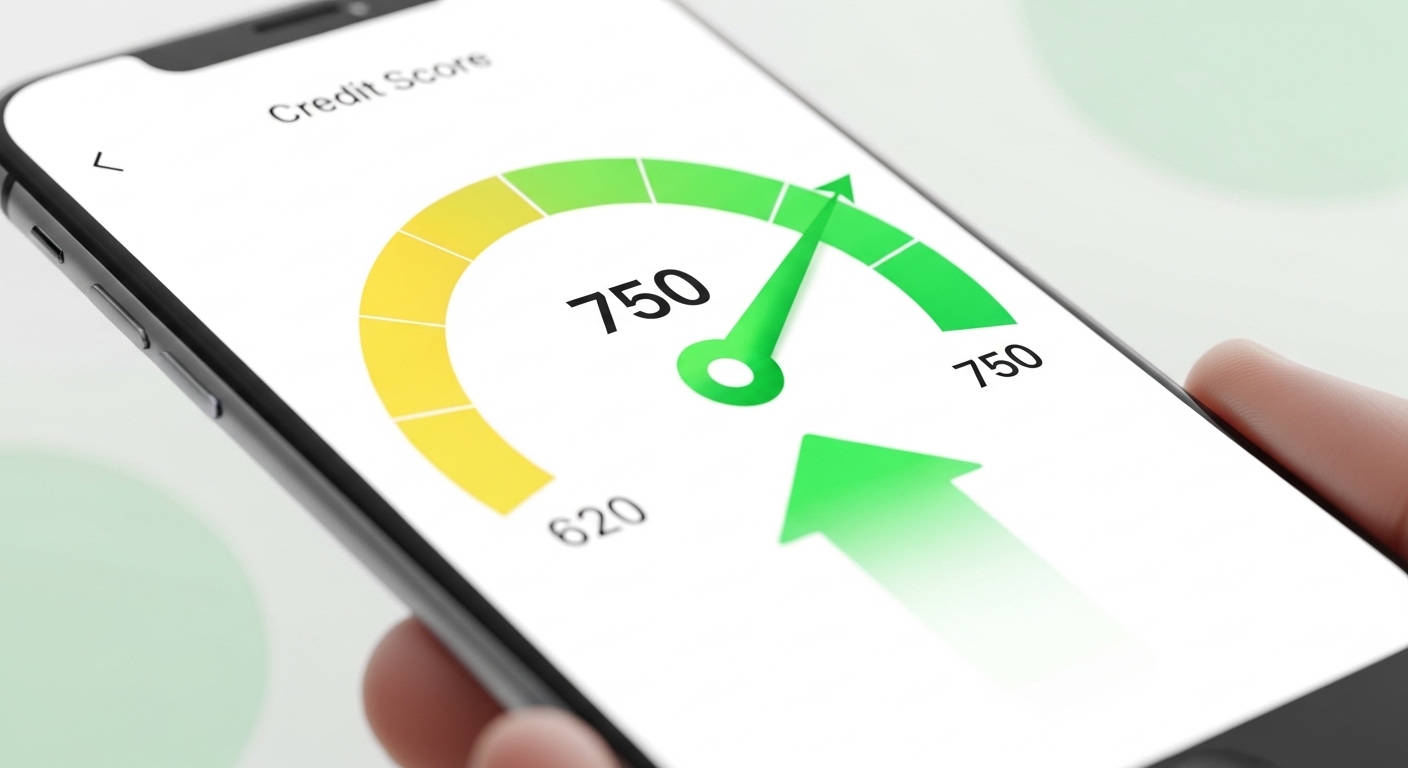
Most people trying to improve their credit score are doing too many things at once.
They’re disputing old collections, opening new cards, closing old ones, googling “how to add 100 points fast,” and refreshing their Credit Karma score every three days hoping something changed. It’s exhausting — and it’s mostly ineffective.
Here’s what actually works: one habit, done consistently, that directly targets the two factors that control 65% of your entire FICO score.
While this habit is powerful, if you are starting from scratch, you should read our complete guide on how to build your credit score fast.
This isn’t a loophole or a credit hack. It’s the single most powerful lever available to any American trying to build or rebuild their credit — and most people either don’t know about it or underestimate how fast it moves the needle.
Editorial note: CreditPilotUSA.com provides credit education based on FICO scoring methodology and real cardholder data. We are not a credit repair service and are not paid to feature specific products.
Last updated: March 2026
The Habit: Pay Before Your Statement Closes — Not Just Before Your Due Date
Almost everyone knows that paying on time is important. What almost no one knows is that when you pay within the billing cycle matters as much as whether you pay on time.
Here’s why.
Your credit score is not calculated on your due date. It’s calculated based on the information your card issuer reports to the credit bureaus — and that report happens once per month, typically on your statement closing date, not your payment due date.
The number reported is your statement balance — whatever you owe at the moment the statement closes. That number becomes your reported utilization. That reported utilization directly feeds into your FICO score calculation.
If your credit limit is $5,000 and your statement closes with a $2,500 balance, your reported utilization is 50% — even if you pay the full $2,500 by the due date and never pay a dollar of interest. The damage to your score happens at statement close, not at the due date.
Why This Matters: The Math Behind Your Score
Your FICO score is built from five factors. Two of them are directly affected by this single habit:
| FICO Factor | Weight | Affected by This Habit |
|---|---|---|
| Payment History | 35% | ✅ Yes — on-time payments |
| Credit Utilization | 30% | ✅ Yes — balance at statement close |
| Length of Credit History | 15% | No |
| Credit Mix | 10% | No |
| New Credit | 10% | No |
Payment history (35%) is straightforward — pay on time, every time, and this factor improves month over month. For a deep dive on what counts as on-time, see our guide on mistakes that hurt your credit score.
Credit utilization (30%) is where most people leave points on the table. The FICO algorithm is highly sensitive to the ratio of your reported balance to your available credit. Industry data consistently shows that people with credit scores above 750 carry an average reported utilization below 10%. People with scores in the 600s typically carry utilization above 30%.
The scoring impact is not linear — dropping from 50% utilization to 10% can add 40–70 points faster than almost any other single action. And unlike payment history, which builds slowly over months and years, utilization changes can reflect in your score within 30 days — as soon as the lower balance is reported.
The Exact Habit in Practice
Step 1: Know your statement closing date. Log into your card’s app or website and find the statement closing date — it’s different from your payment due date (usually 21–25 days later). This is the date that determines what balance gets reported.
Step 2: Pay down your balance before that date. A few days before your statement closes each month, pay your balance down to below 10% of your credit limit. If your limit is $3,000, aim to have less than $300 showing when the statement closes.
Step 3: Let the statement close and pay the remainder. After the statement closes with the low balance, pay whatever remains before the due date as usual. You get the full grace period, you pay zero interest, and your credit report shows a low utilization — the best of both worlds.
Step 4: Repeat every month. Consistency is what builds the sustained score improvement. One month of low utilization helps. Twelve consecutive months of sub-10% utilization is what pushes scores into the 750–800 range.
How Fast Does This Actually Work?
Timeline varies based on your starting score, but here’s what consistent utilization management typically produces:
| Starting Score | Utilization Before | Utilization After | Estimated Score Change | Timeframe |
|---|---|---|---|---|
| 580–620 | 60–80% | Under 10% | +50 to +80 points | 60–90 days |
| 630–670 | 40–60% | Under 10% | +30 to +60 points | 30–60 days |
| 670–710 | 20–40% | Under 10% | +20 to +40 points | 30–60 days |
| 710–750 | 10–20% | Under 10% | +10 to +20 points | 30 days |
These are estimates based on FICO scoring patterns — not guarantees. Your actual results depend on your full credit profile. But the direction is consistent: lower reported utilization produces measurable score improvement within one to three billing cycles for most cardholders.
To understand what score range you’re targeting and what it unlocks in terms of loan rates and card approvals, see our guide on what is a good credit score in the USA.
The Two Mistakes That Cancel This Habit Out
Mistake 1: Closing old cards to “clean up” your profile. Closing a credit card reduces your total available credit — which mechanically increases your utilization percentage, even if you don’t charge a single new dollar. A $5,000 card you close could instantly push your utilization from 15% to 30% and cost you 20–30 points overnight. Keep old cards open and put a small recurring charge on them monthly to keep them active.
Mistake 2: Applying for multiple new cards at once. Each new credit card application triggers a hard inquiry, which temporarily reduces your score by 5–10 points. Multiple applications in a short period compound this effect. If you’re actively trying to improve your score, limit new applications to one every 6 months.
The Right Tools to Track Your Progress
You can’t manage what you can’t measure. Two free tools let you monitor both your score and your utilization in real time:
Credit Karma — shows your VantageScore from TransUnion and Equifax, updated weekly. Use it to track directional progress and see how utilization changes affect your score in near real time.
Experian’s free app — shows your actual Experian FICO Score 8, updated monthly. This is the score most lenders pull, so Experian’s version is the most relevant benchmark for loan and card approval purposes.
For a full comparison of credit monitoring apps and which ones to use at each stage of your credit journey, see our Best Apps to Improve Your Credit Score guide.
One More Thing: The Card You Use Matters Too
This habit works on any credit card — but it works best when you’re building with a card designed for it.
If you’re starting from zero or rebuilding from a damaged profile, using a card that reports to all three credit bureaus monthly is essential. A card that only reports to one bureau builds credit 3x slower than one that reports to all three.
The best beginner cards for this strategy — including options that require no credit history — are in our 10 Best Credit Cards for Beginners guide. And if you want a complete 90-day roadmap for getting from a low score to 700+, our How to Build Your Credit Score Fast guide covers every step in sequence.
The Bottom Line
Most credit advice is either too complicated or too slow. This habit is neither.
Pay your balance down before your statement closes. Keep reported utilization below 10%. Let the bureaus report the lower number. Watch your score move.
That’s it. One calendar reminder each month. No credit repair agency, no complicated strategy, no waiting years to see results.
The fastest path to a better credit score has been sitting in your billing cycle this whole time.
Disclaimer: Credit score improvements vary based on individual credit profiles. FICO scoring models and credit bureau reporting practices are subject to change. Information provided is for educational purposes only and does not constitute financial or legal advice.

Danilo is a Credit Analyst and the Founder of CreditPilotUSA.com. With deep expertise in the credit card industry, he translates complex banking news and reward systems into actionable financial strategies. Dedicated to helping Americans master their credit scores and maximize the cards in their wallets.